Home / Services / Patios & paving / Indian stone
Large-format Indian sandstone is one of the crafts we're known for. We lay large riven flags, from kandla grey through to warm buffs, on a full mortar bed so the surface stays flat and nothing rocks.
What it is
Buying the stone is the straightforward part. A pack of sandstone is not a set of identical tiles, and that is the whole character of the material: no two flags are quite the same colour, size or thickness. Laying it well means working with that variation rather than against it.
Riven, porous and varied are the three words worth knowing.
In plain English
Indian stone is natural sandstone, quarried in India and split along its bed rather than sawn flat. That split face is what "riven" means: a natural texture, and colour that shifts from flag to flag. It is porous, so it will take a sealer if you want one. It is the natural stone we lay most often, because it offers real stone without the price of the rarer types.
Materials
The right colour depends mostly on the house it sits against. Here are the three we lay most often. Send us a photograph of the brick or render and we will advise which suits best.
This is the colour most people picture: a cool blue-grey that suits grey render, anthracite windows and newer builds. It settles slightly lighter as it weathers in.
Warm buffs, autumn browns and pinks with more colour movement across the pack suit red-brick and older Leeds houses, and hide leaf-fall and everyday dirt better than a pale grey.
These ranges blend greys, buffs and browns in one pack for a softer, more varied look: a sensible middle road if you cannot choose between grey and the warmer tones.
This is a starting point rather than the full range. A fuller colour guide is in preparation; for now, we will take you through samples on site.
Why people choose it
It is porous, so it will stain from barbecue grease or red wine if it is left unsealed. The colour also varies from flag to flag, which most people want and some do not. If you want a surface that looks identical everywhere, porcelain is the better choice.
It also requires exactly the same base as anything else we lay. Natural stone on a thin base fails just as quickly as a cheap tile does.
Still set on natural stone? Request a quote and we will visit to measure up.
Get a written quote →Not just patios
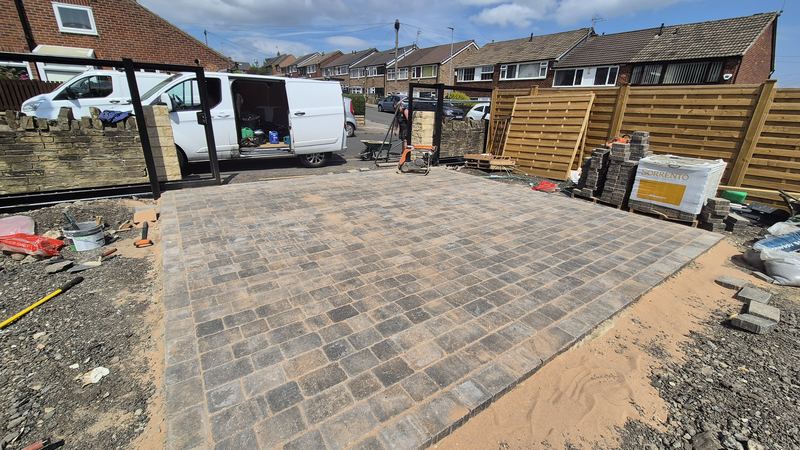
The same flags will take a car's weight on a deeper, stronger sub-base, so you can run one stone from the driveway round to the patio. It is a different build from a patio, and we carry out both.
Indian stone driveways →Real projects
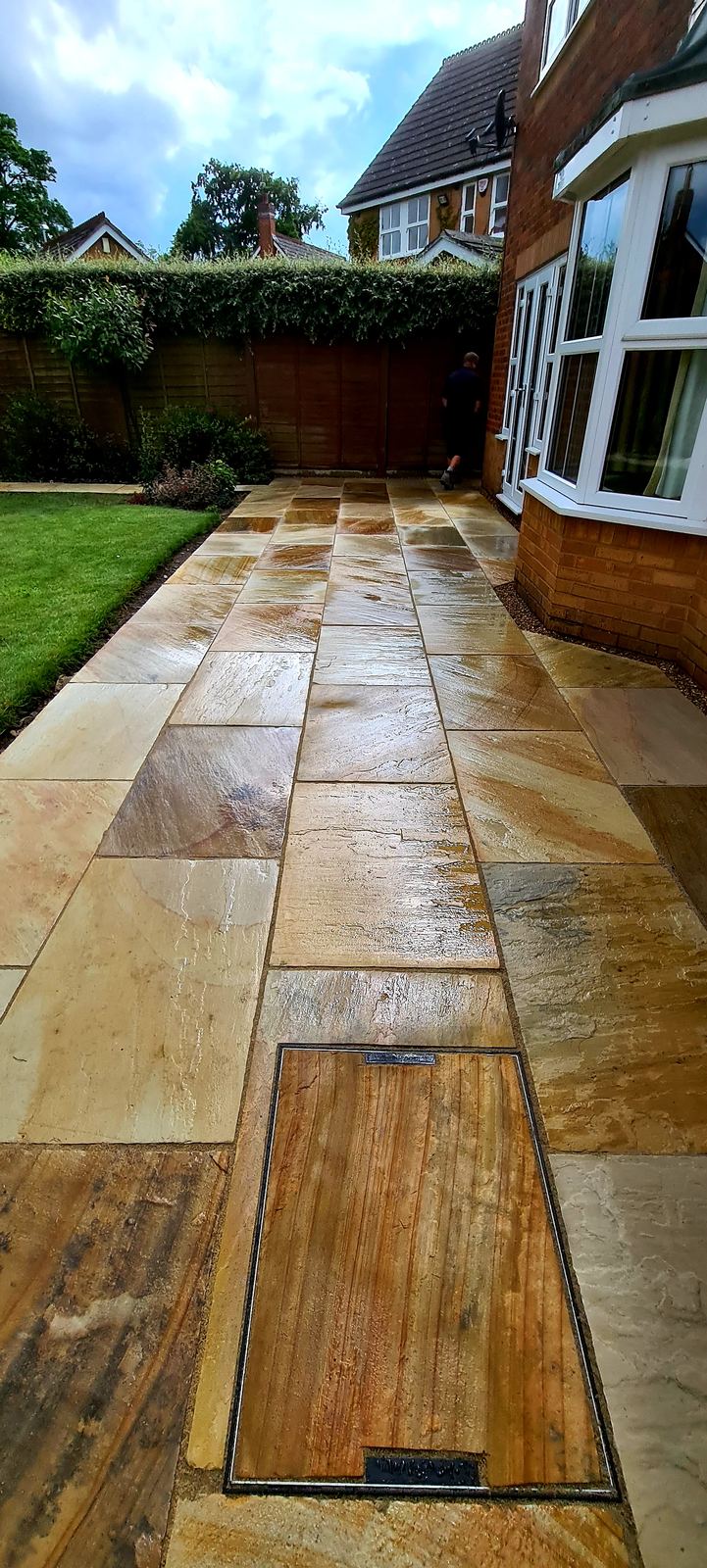
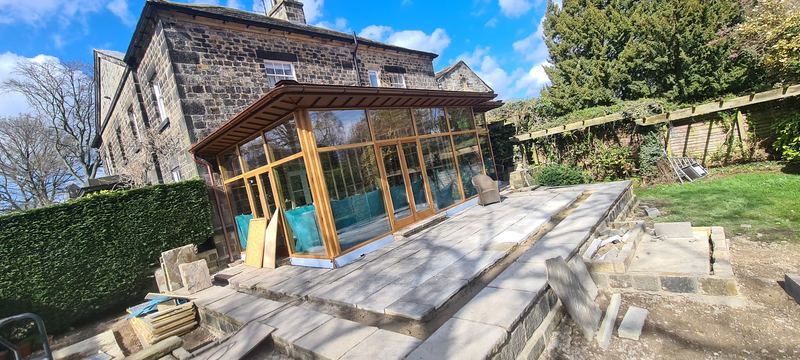
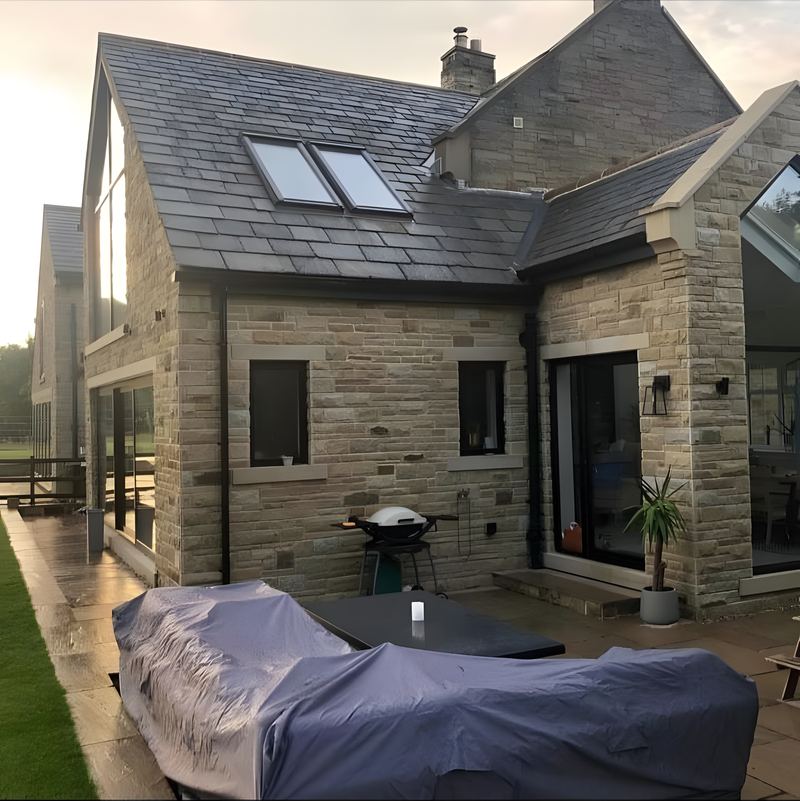
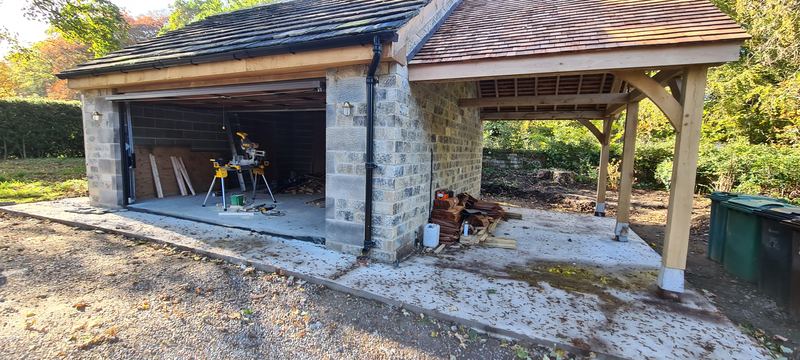
All photographs are of our own work. If we show it, we built it.
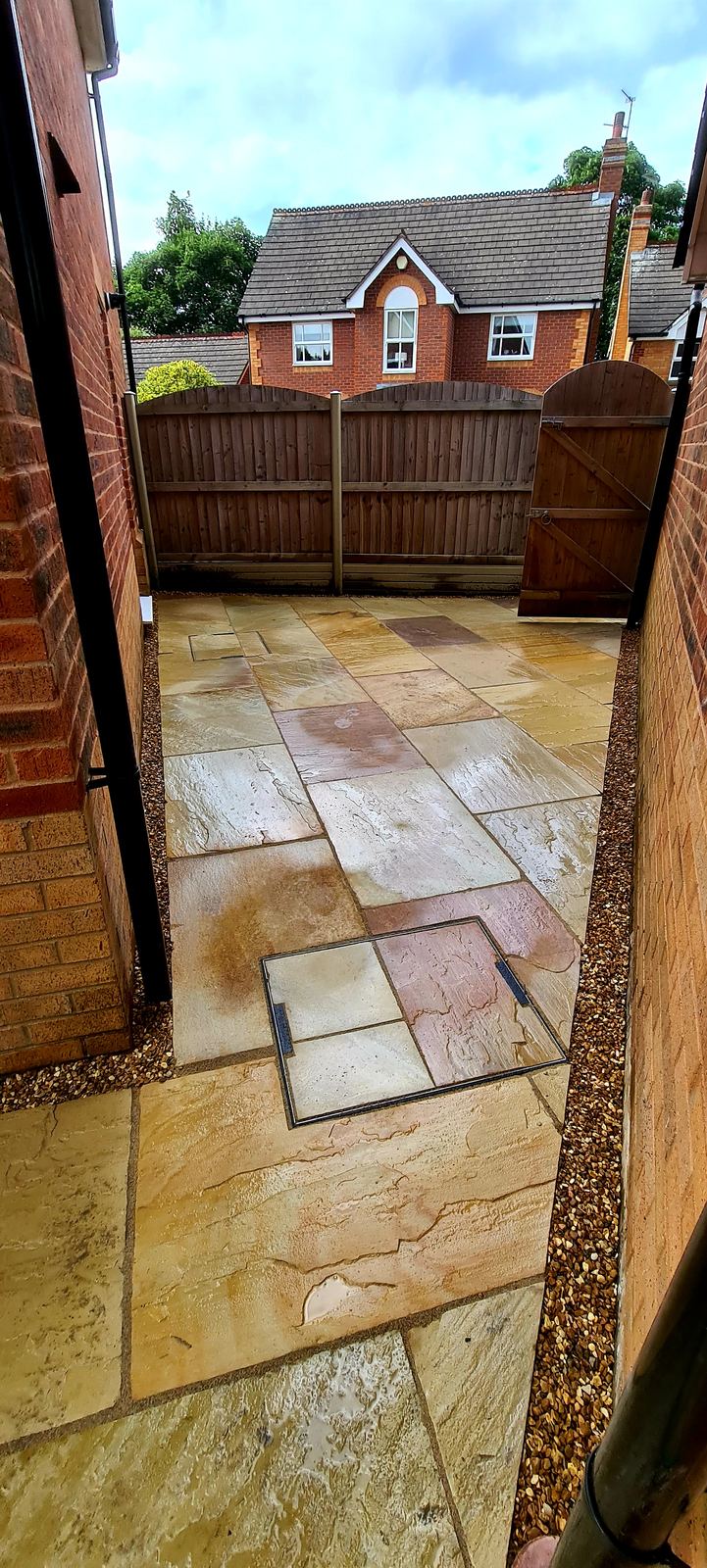
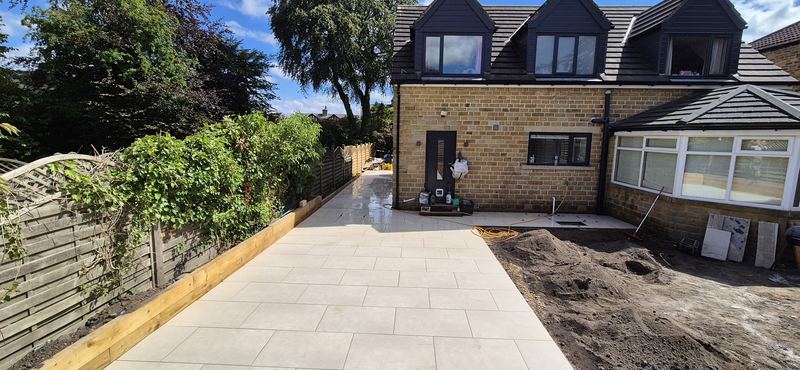
Kandla grey, large format
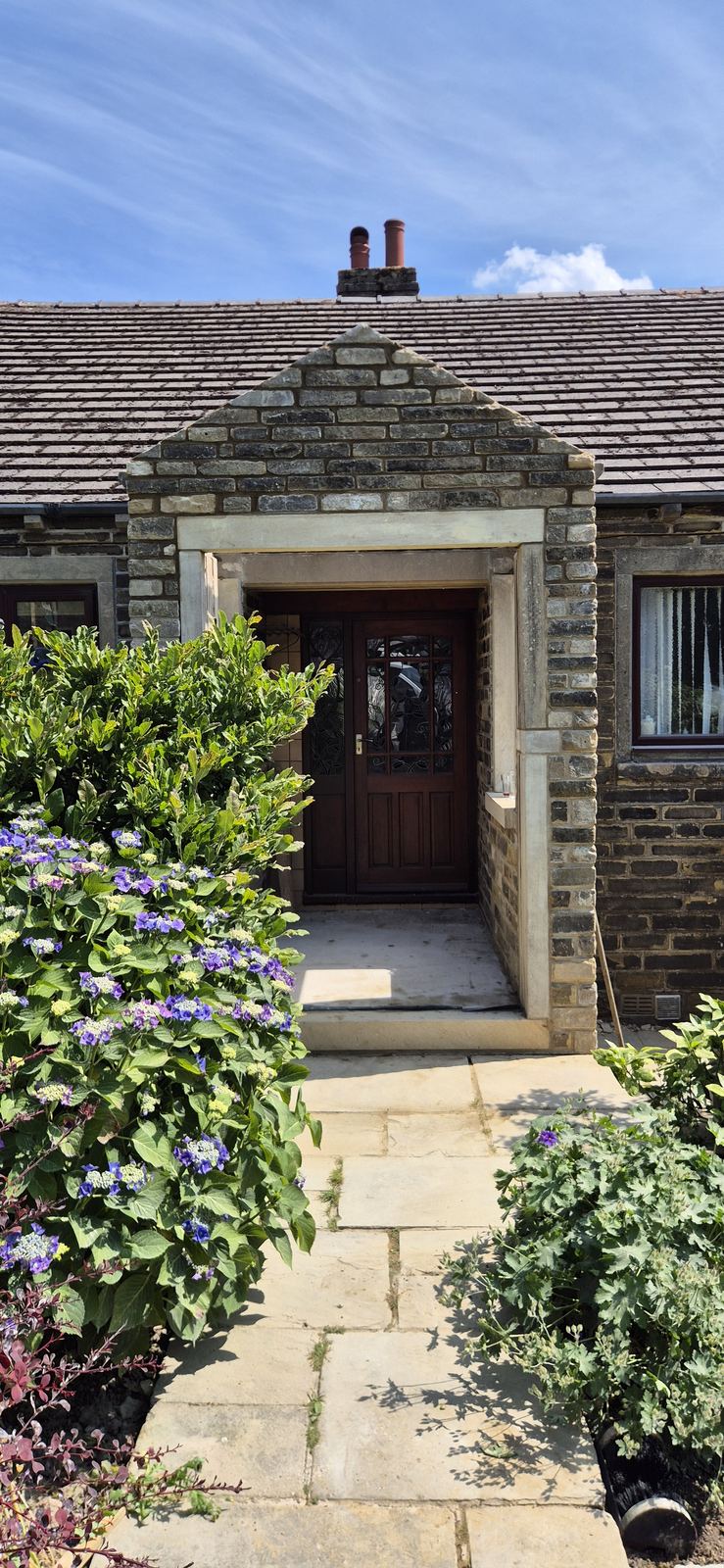
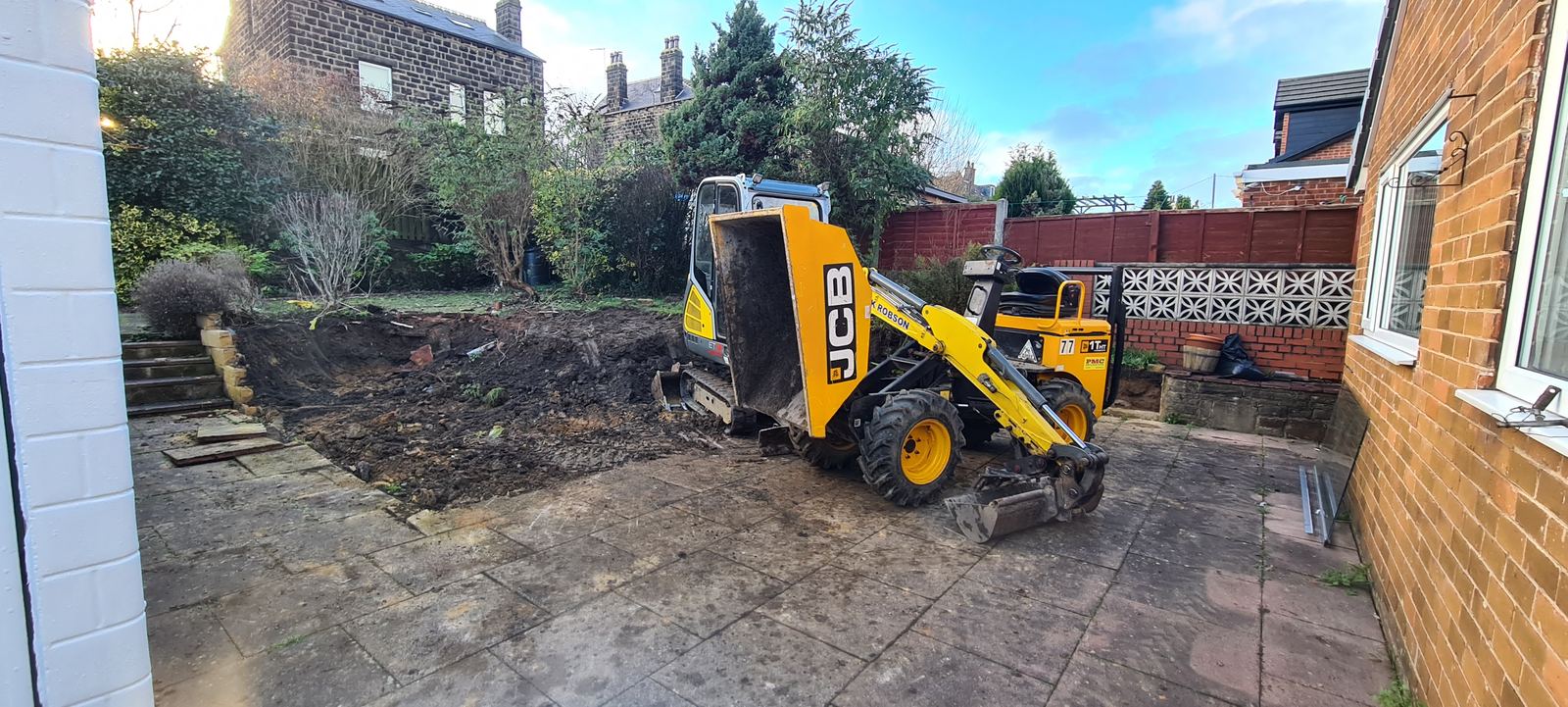
The old patio is lifted first
Measured on site and itemised line by line.
Request a written quoteor view more stone paving in our projects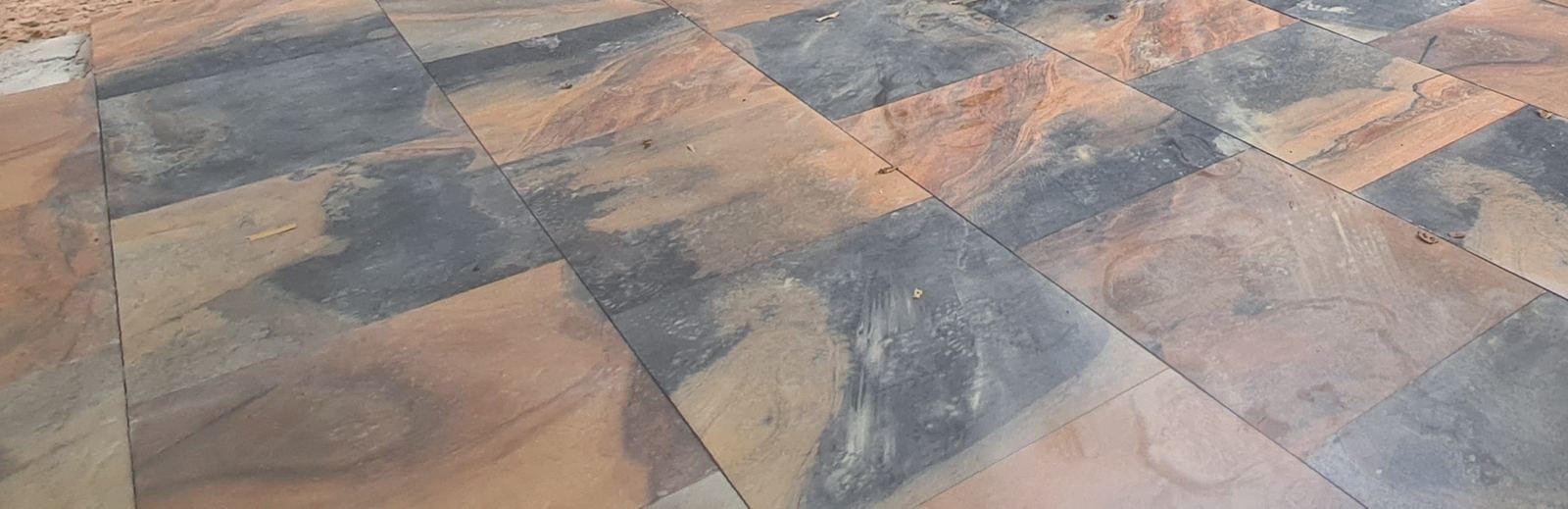
Large flags give a patio a calm, expensive appearance: fewer joints and larger expanses of stone. They are also the easiest to get wrong.
A 900 by 600 sandstone flag is heavy and awkward to handle. Laid badly, it rocks and the whole patio reads as uneven. We lift each one two-handed, set it to line and level, and check across the works as they progress, not at the end.
Every flag is laid on a full bed of wet mortar, buttered and bedded, never spot-dabbed on the corners. Natural stone varies slightly in thickness from flag to flag, so we bed each one to its own depth to keep the surface flat.
Even joint widths, struck and pointed neatly, run straight across the patio. On riven stone the joints are half of how precise the finished work looks, so we set them out correctly before the first flag goes down.
Guaranteed for 5 years
A 5-year workmanship guarantee covers the groundworks: the compacted sub-base, the full mortar bed under every flag, the laying, and the falls and drainage that take water away. The base is the part we put our name to. The flags carry their own manufacturer's warranty.
Getting that right across a whole patio is the real work. Tell us roughly how large yours is and we will send you a written price.
Get a written quote →Common questions
Other services
One team, one standard of workmanship, across everything we build.
Would you like to see all three stones side by side? Compare them on the patios hub →
Send a photograph of the garden and the house, with rough measurements, and we will visit to measure up. You will receive a written, itemised, fixed-price quote, with honest advice on the colour that suits.
Or call 07743 342155