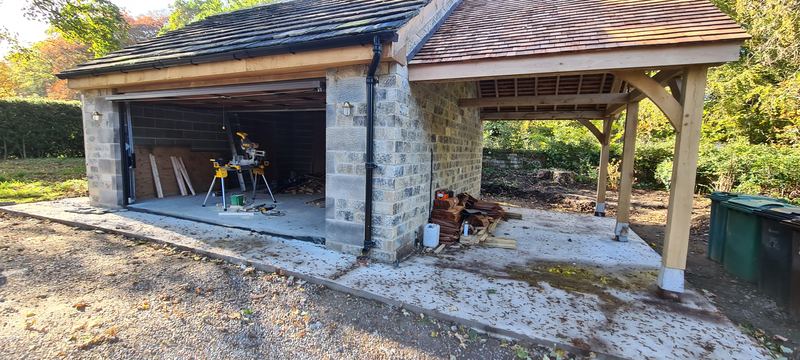
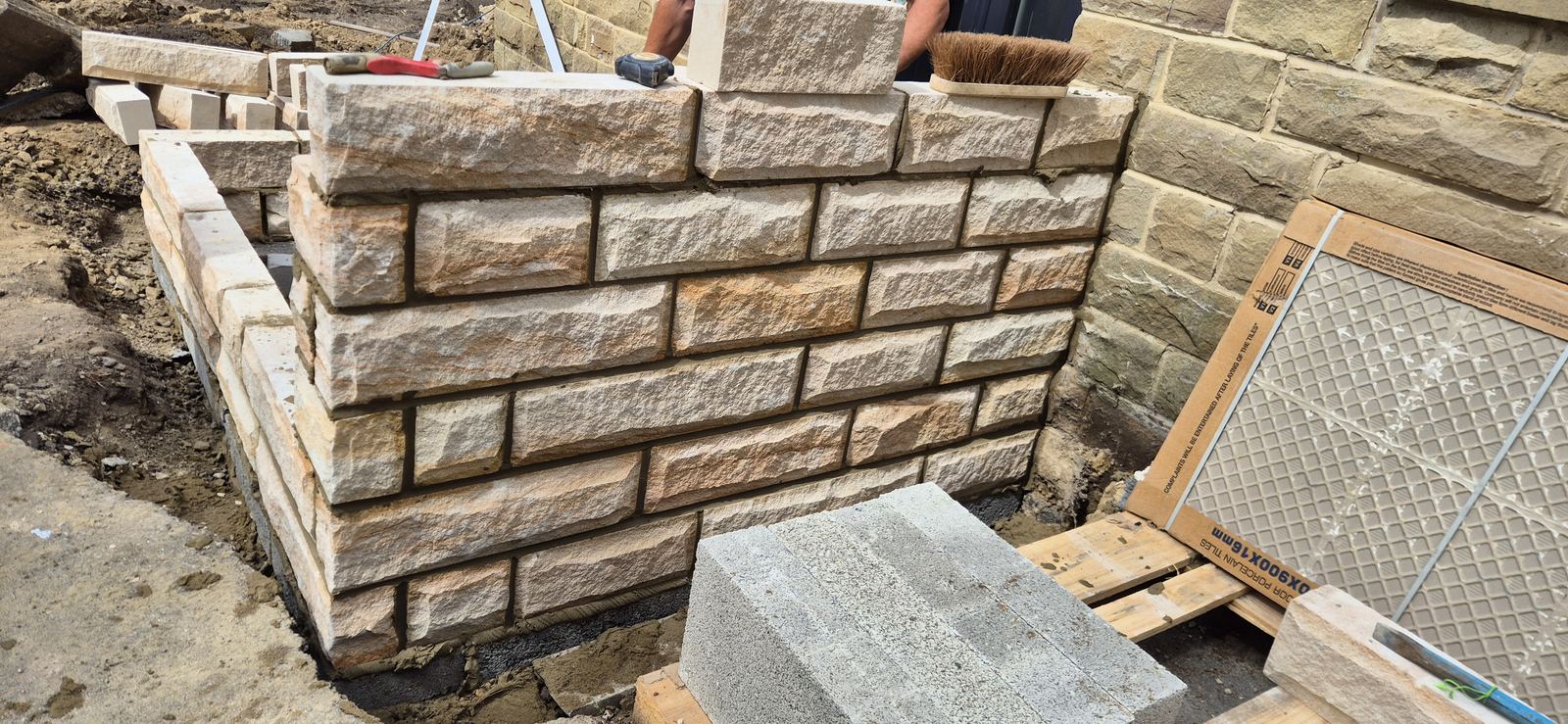
Coursed sandstone
Read moreClose
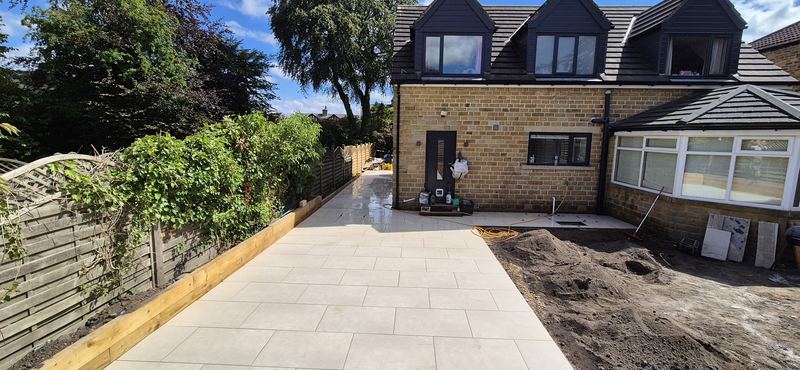
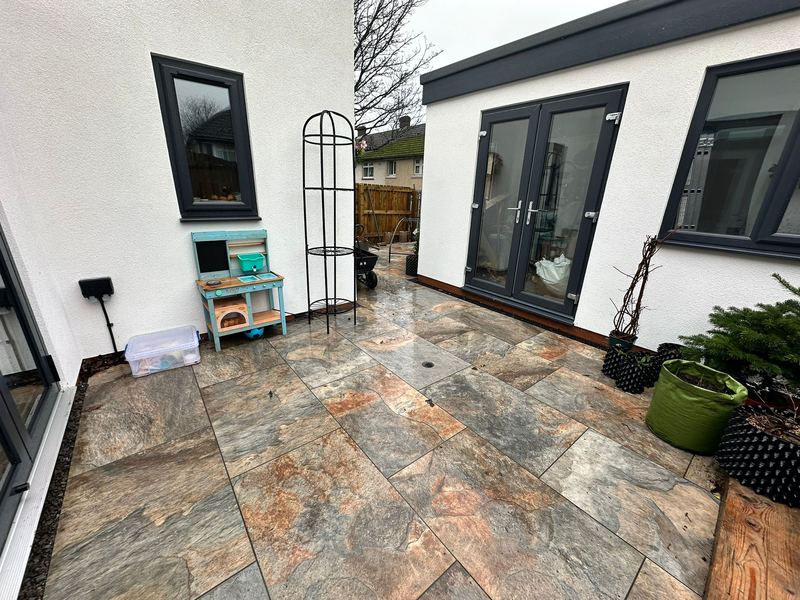
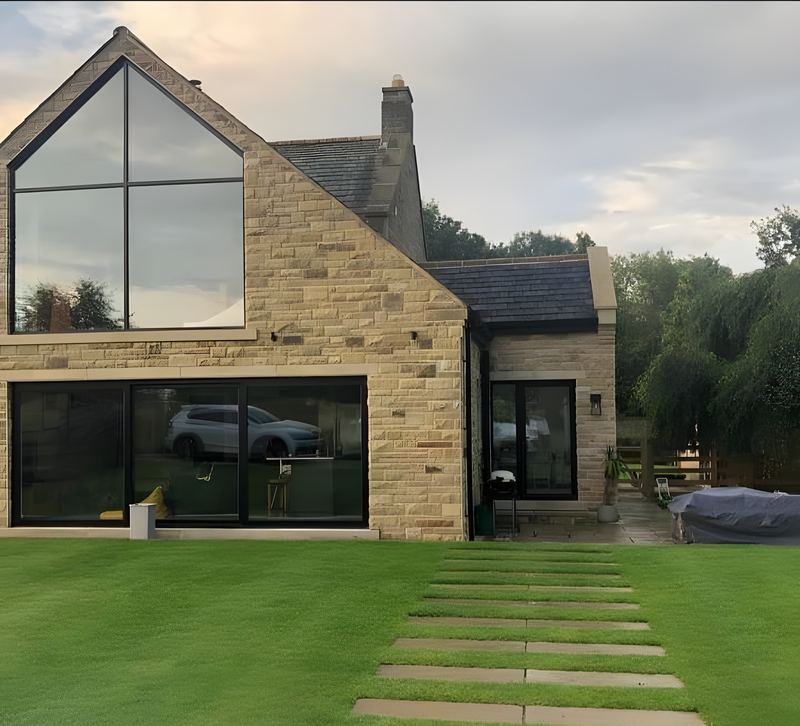
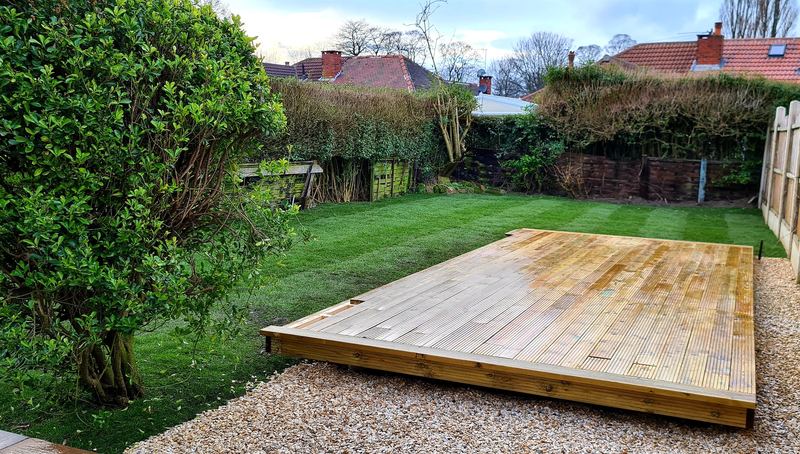
Squared blocks laid in level courses form the standard face of most Victorian Leeds terraces and villas. It is the easiest stone to match, because the coursing height gives us an exact measure to work to.
Home / Services / Stone masonry
Our specialism · stone
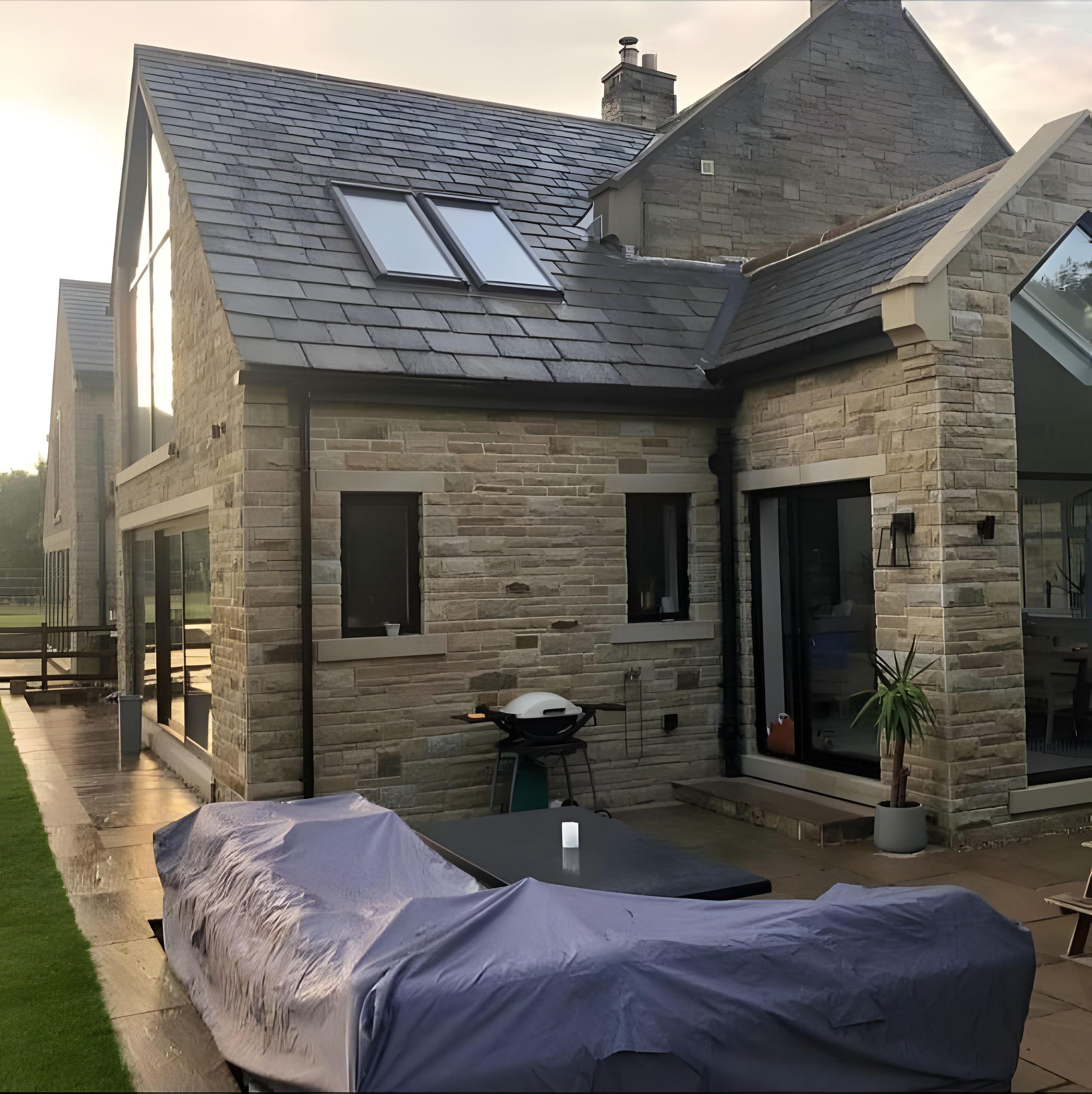
The stone craft is what sets us apart from other Leeds builders: stone-built and stone-matched extensions, garden walls, steps and reclaimed stone patios, much of it in reclaimed Yorkshire stone that already looks a hundred years old. The team is led by Simon Hitchins, with 27 years' experience in the trade.
Stone matching
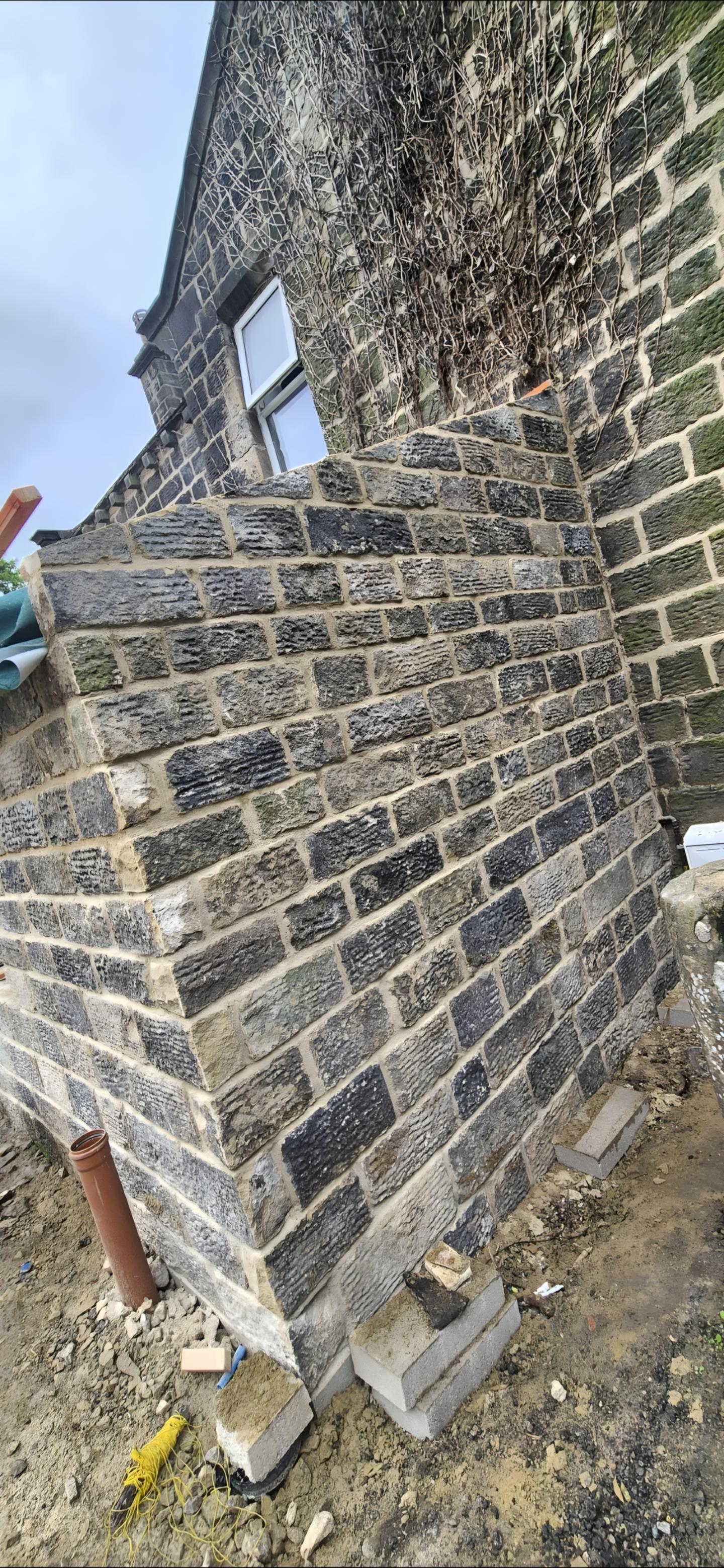
Many extensions look bolted on, with the wrong brick or render set against original stone. Ours are built to disappear. On a stone house we build the outer leaf in matching stone, properly brick-matched where the house is brick, or in a reclaimed Yorkshire stone leaf coursed to your original walls so the join is barely visible.
Very few firms in Leeds offer stone-matched extension work, and it is what makes a new room look as though it was always part of the house. The rest of the project runs like any of our extensions: architect designed, building control approved, public liability insurance of £5m, and a guarantee in writing.
You can read how an extension runs, from footings to handover, on our house extensions in Leeds page.
Planning new work against old stone? Send a photograph of the house and we will tell you what a match would involve.
Get a written quote →Reclaimed Yorkshire stone
In plain English
Reclaimed Yorkshire stone is sandstone and gritstone salvaged from old Yorkshire buildings, walls and mills as they come down. It was quarried a hundred years or more ago, has already weathered to its final colour, and is cleaned and re-dressed for a new use. It is not new stone made to look old. It is the genuine material, used again.
01Quarried 100+ years ago
New stone reads as new for a good twenty years while it weathers in. Reclaimed stone has already done that weathering, so a wall or patio we lay this spring looks as though it has been part of the house since the street was built.
02A century already stood
Longevity is the practical advantage. Because this stone has already stood for a hundred years, we know exactly how it wears, with no twenty-year wait to find out.
03Every load picked by hand
We buy from reclamation yards around Leeds and Batley, matching bed height, face and colour against samples taken from your property. Stone only comes in as old buildings come down, so it takes longer to source than a merchant's pallet, and we allow for that when we quote.
Trusted with the real thing
Reclamation is careful, accountable work, and it is not confined to back gardens. An academy school engaged Simon directly for the reclamation of its Victorian stone, and it took months of work with the council to secure approval before a single stone was moved.
The term covers several different materials, and the one your house is built in determines what we can match it with. In plain terms:
Squared blocks laid in level courses form the standard face of most Victorian Leeds terraces and villas. It is the easiest stone to match, because the coursing height gives us an exact measure to work to.
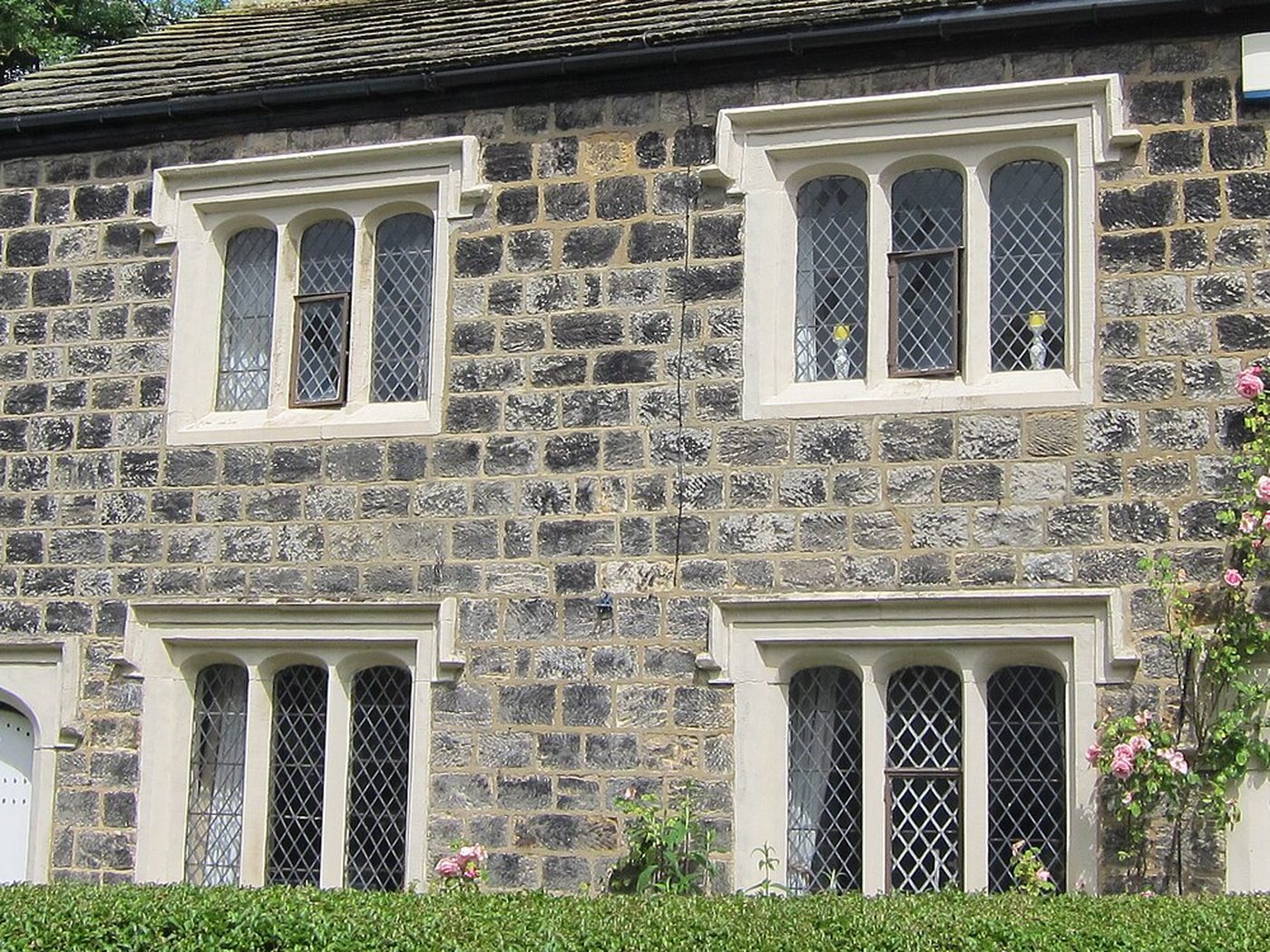
Gritstone is coarser, harder and darker, and it weathers almost black in a city. It is common on older and higher ground towards the moors. Match it with new stone and the difference will show for twenty years.
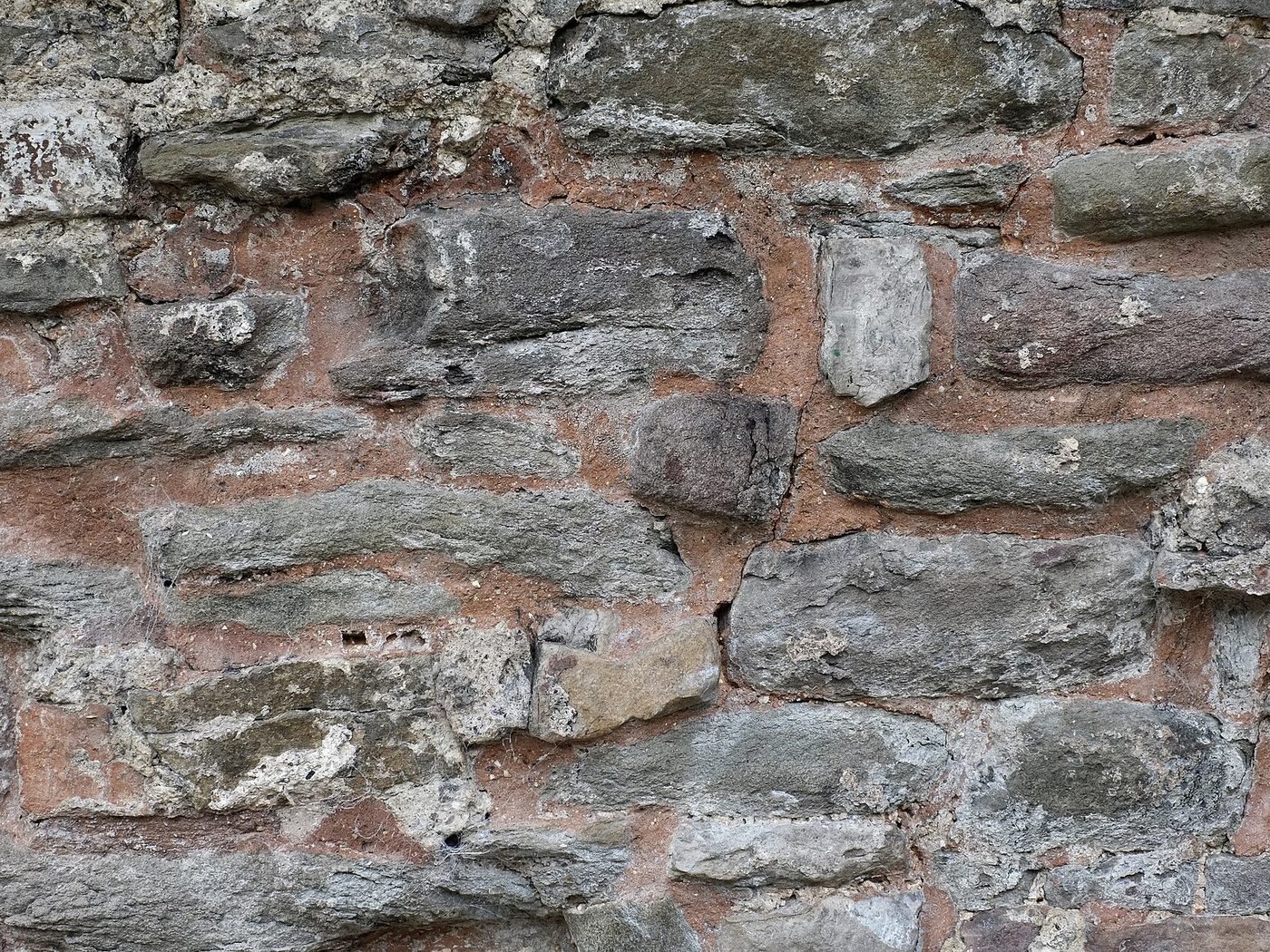
Uncoursed stone of mixed sizes, fitted together as it comes, is the usual build for old boundary and field walls. It is slower to lay well than coursed work, because every stone is a decision.
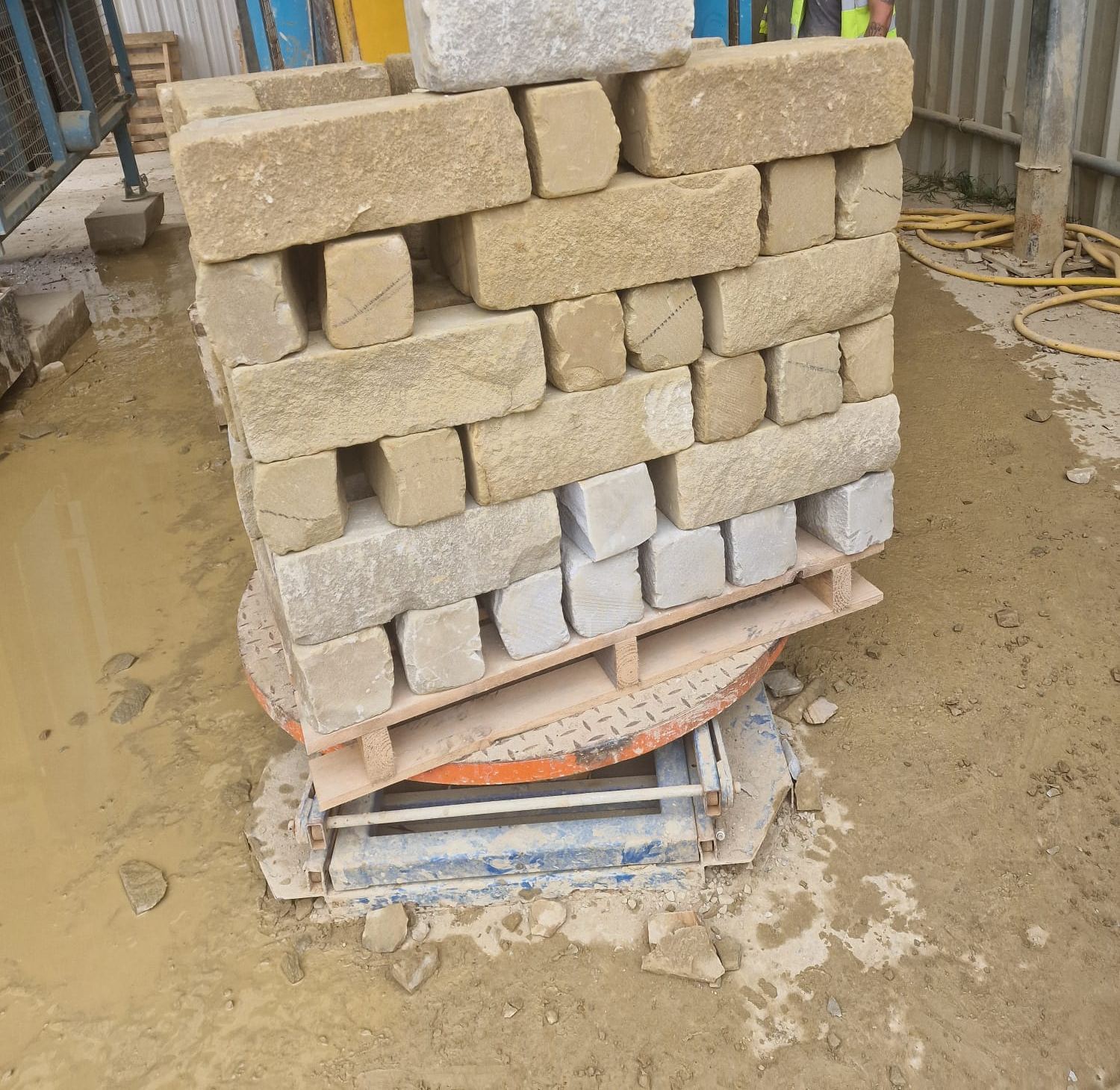
Walling stone is stone sold specifically for building walls, either new from a quarry or reclaimed from a demolition. It is the raw material rather than a style, and the same load can be laid coursed or random.
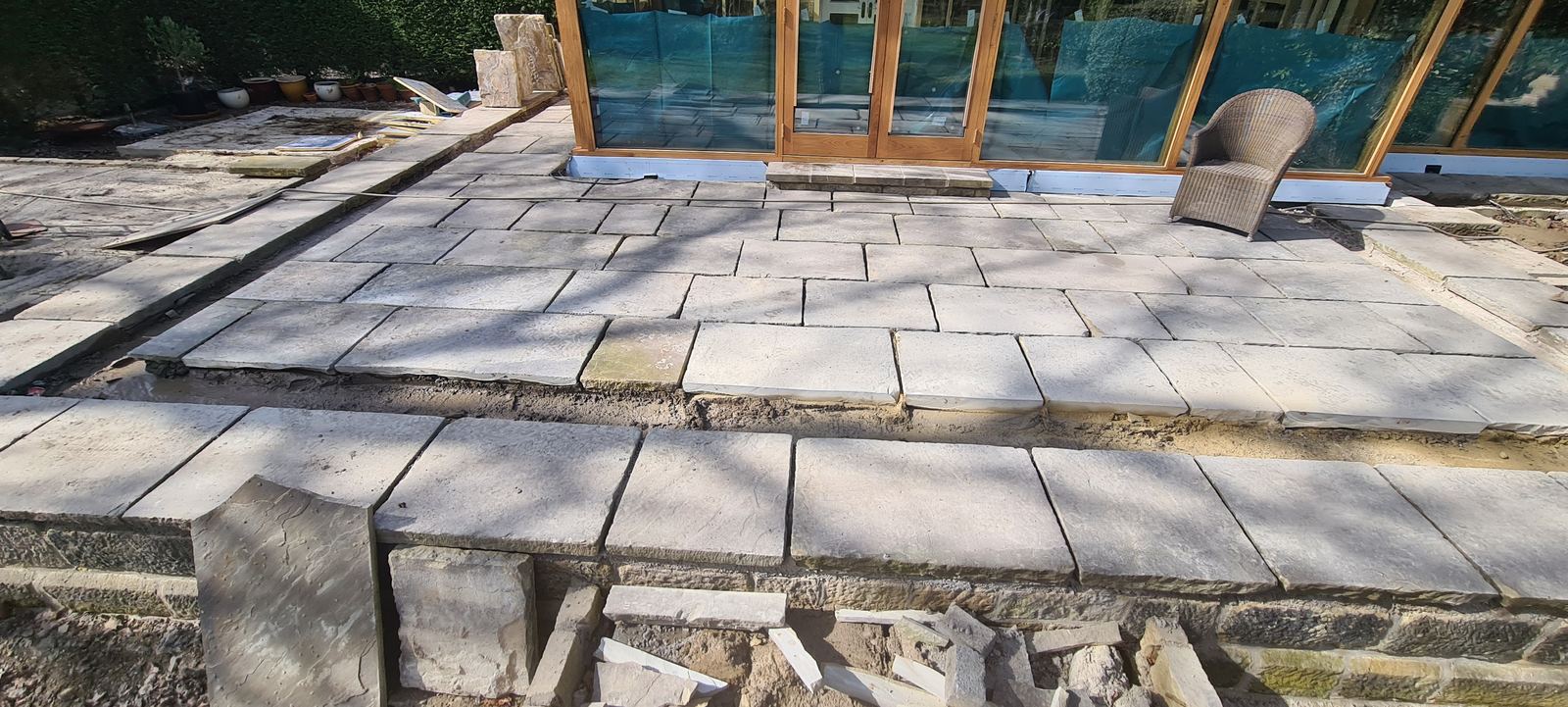
Thick riven paving slabs, often 600mm and above, are lifted from old mill floors, yards and pavements. They are what people picture when they describe a reclaimed stone patio.
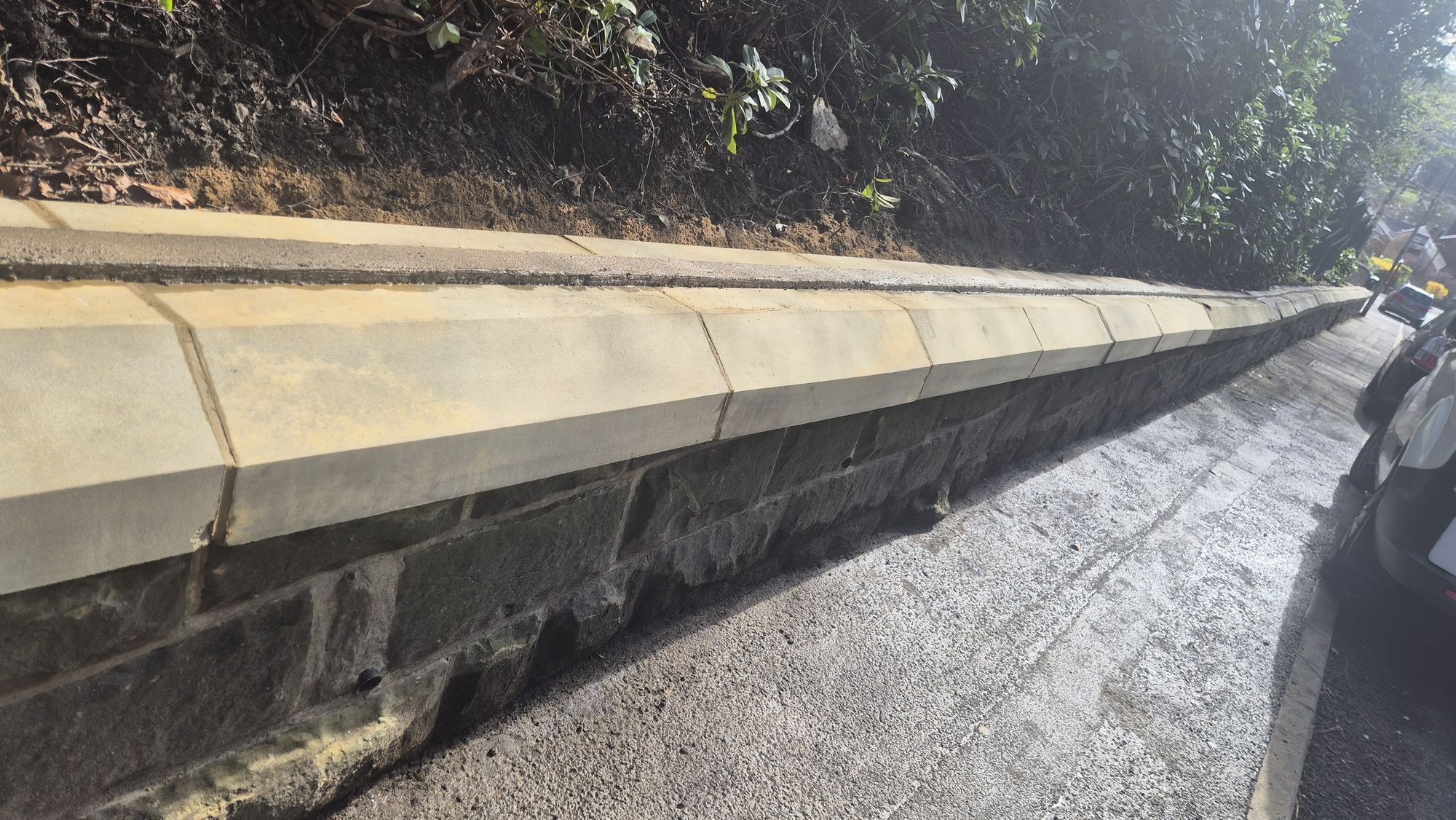
Reclaimed is the original stone used again. Reproduction is new concrete or new stone cut and tumbled to look aged. We lay reclaimed, and we will advise you plainly when a project would be better served by new stone.
Four of these are our own work. The gritstone and random rubble photographs are library images, used with thanks under licence: image credits.
Why reclaimed
"People think reclaimed stone is just about the look. It is, but it's also the most honest material we lay. It's already stood for a hundred years, so we know how it wears, and we're just giving it another hundred."
Simon Hitchins · Urban Green Masonry & Landscapes
What we build
Alongside the extensions, the team is out most weeks on walls, steps and stone patios. For new stone underfoot we also lay large-format Indian stone and porcelain, both covered on our patios and paving page, and the same coursing goes into stone porches at the front of the house.
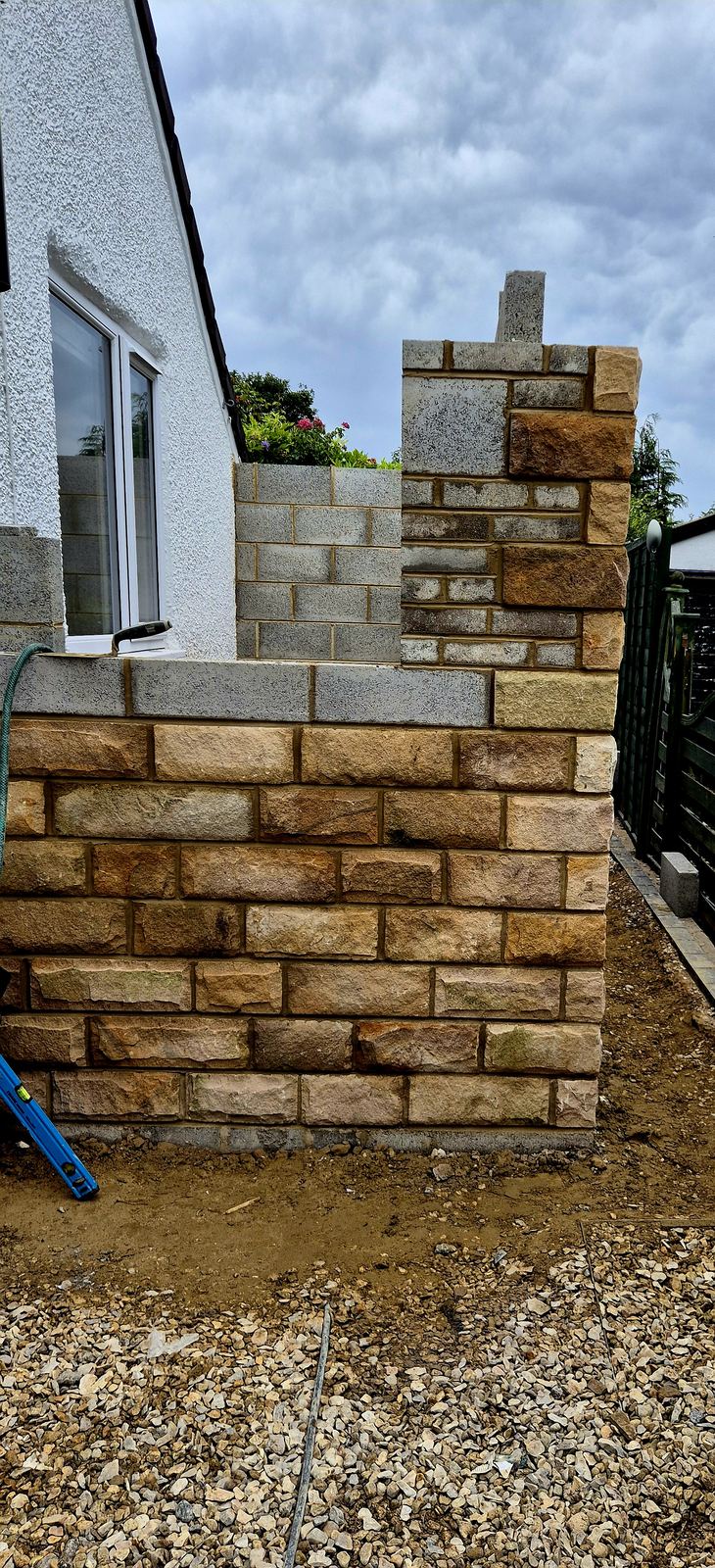
We build dry stone and mortared walls in reclaimed or new Yorkshire stone, and in brick where the house calls for it, both new builds and rebuilds where a wall has begun to bulge or lean. Each is built to stand for decades.
Stone or brick · dry or mortared · retaining walls on blockwork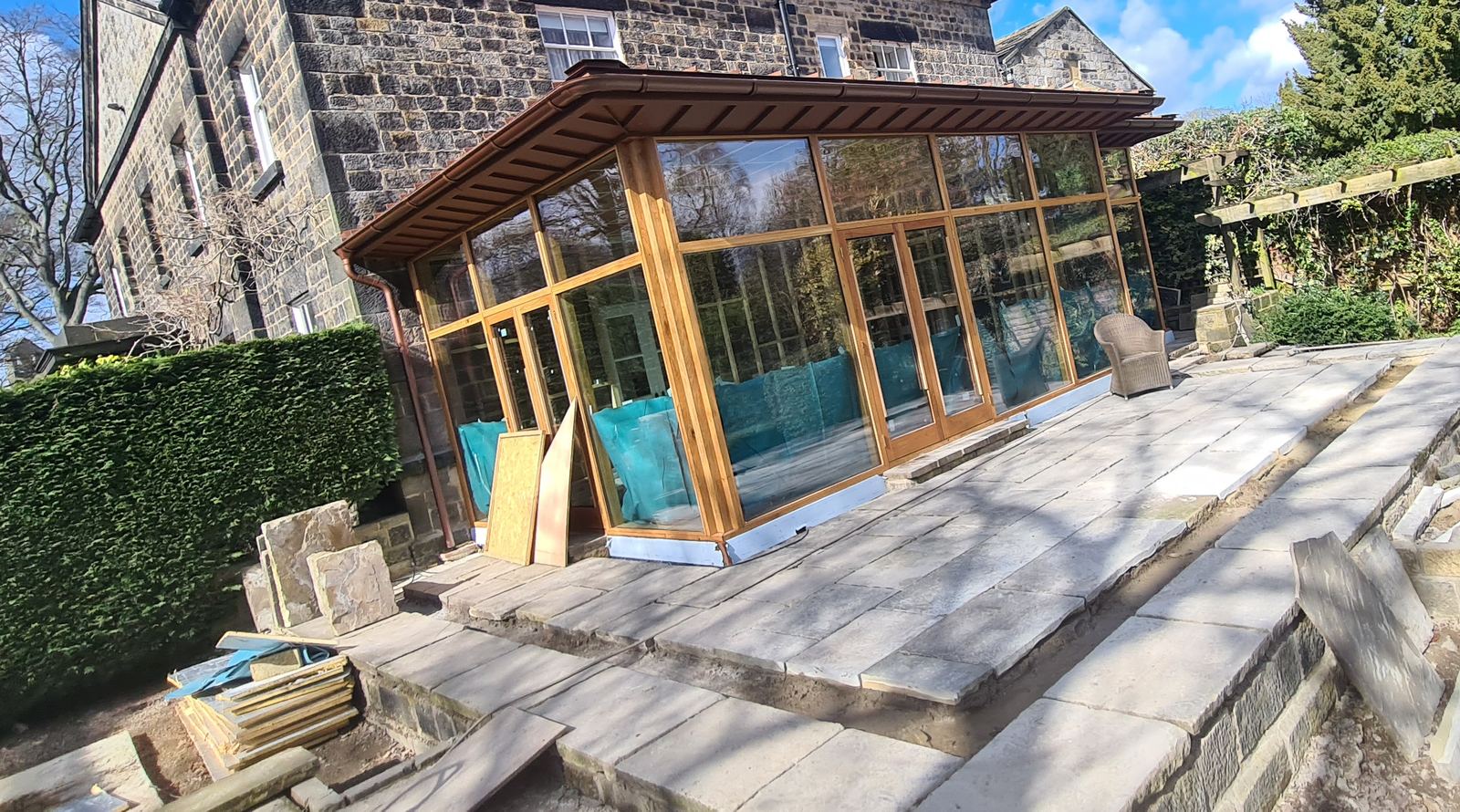
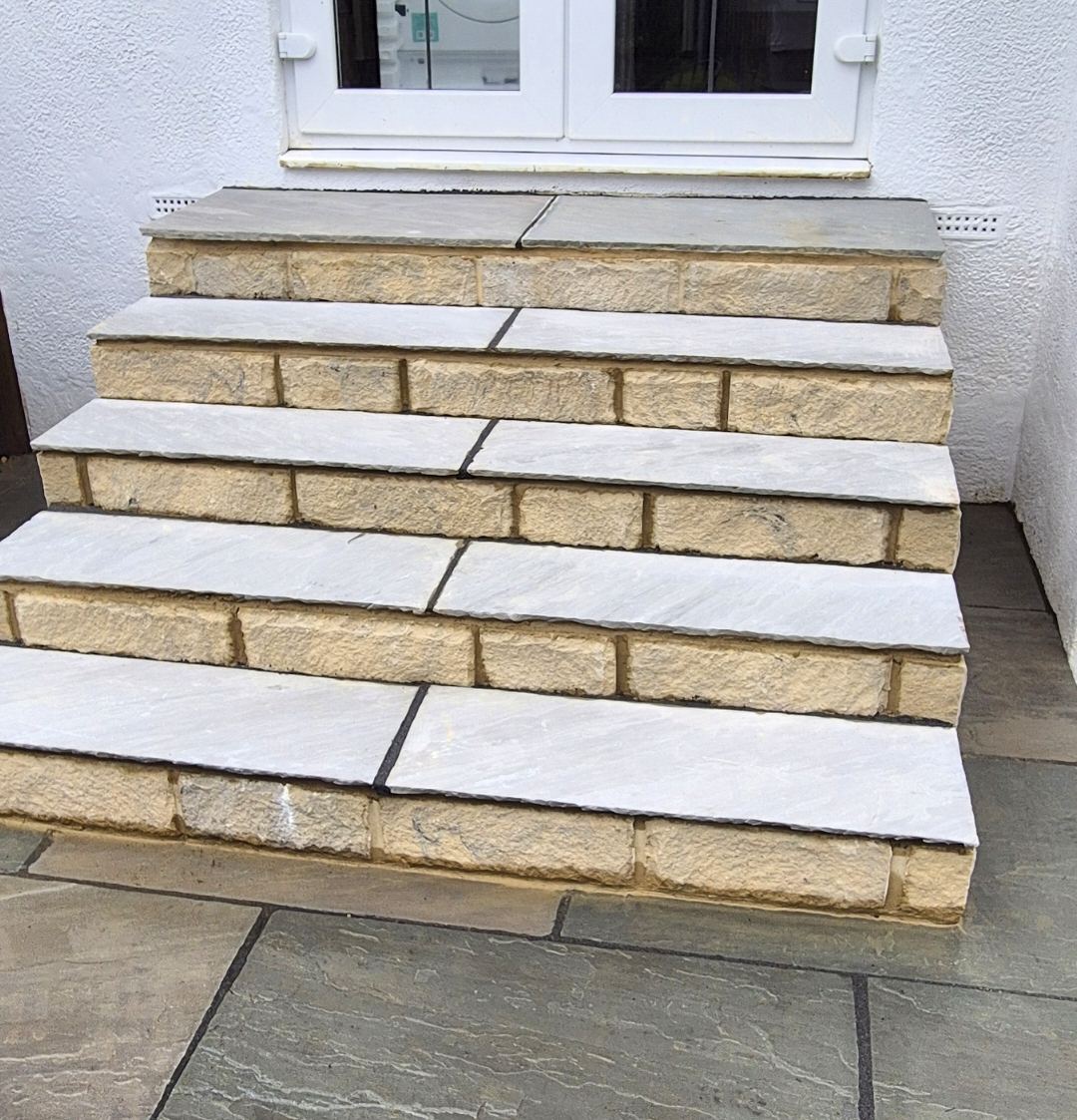
We build stone steps for sloping gardens, gate piers and pillars, hearths, copings, and the finishing features that make a garden feel complete. Everything is cut and coursed to sit with the walls and the house, in the same stone, so nothing looks bought-in.
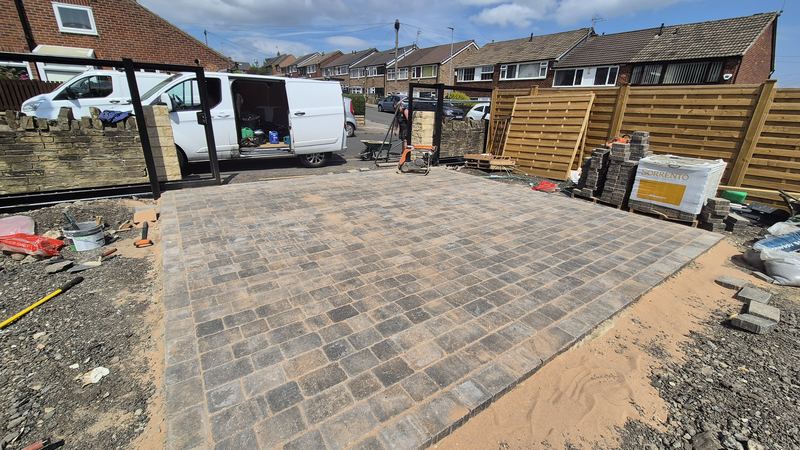
Steps · piers · copings · hearthsReclaimed Yorkshire flags, often 600mm, are lifted from old yards and laid on a full new sub-base so they sit flat and drain correctly. It is work we particularly enjoy: a patio that looks a hundred years old on the day we hand it over.
Reclaimed flags · new sub-base · lime-pointedIf any of this sounds like your project, the sooner you ask, the sooner we can begin sourcing the right stone.
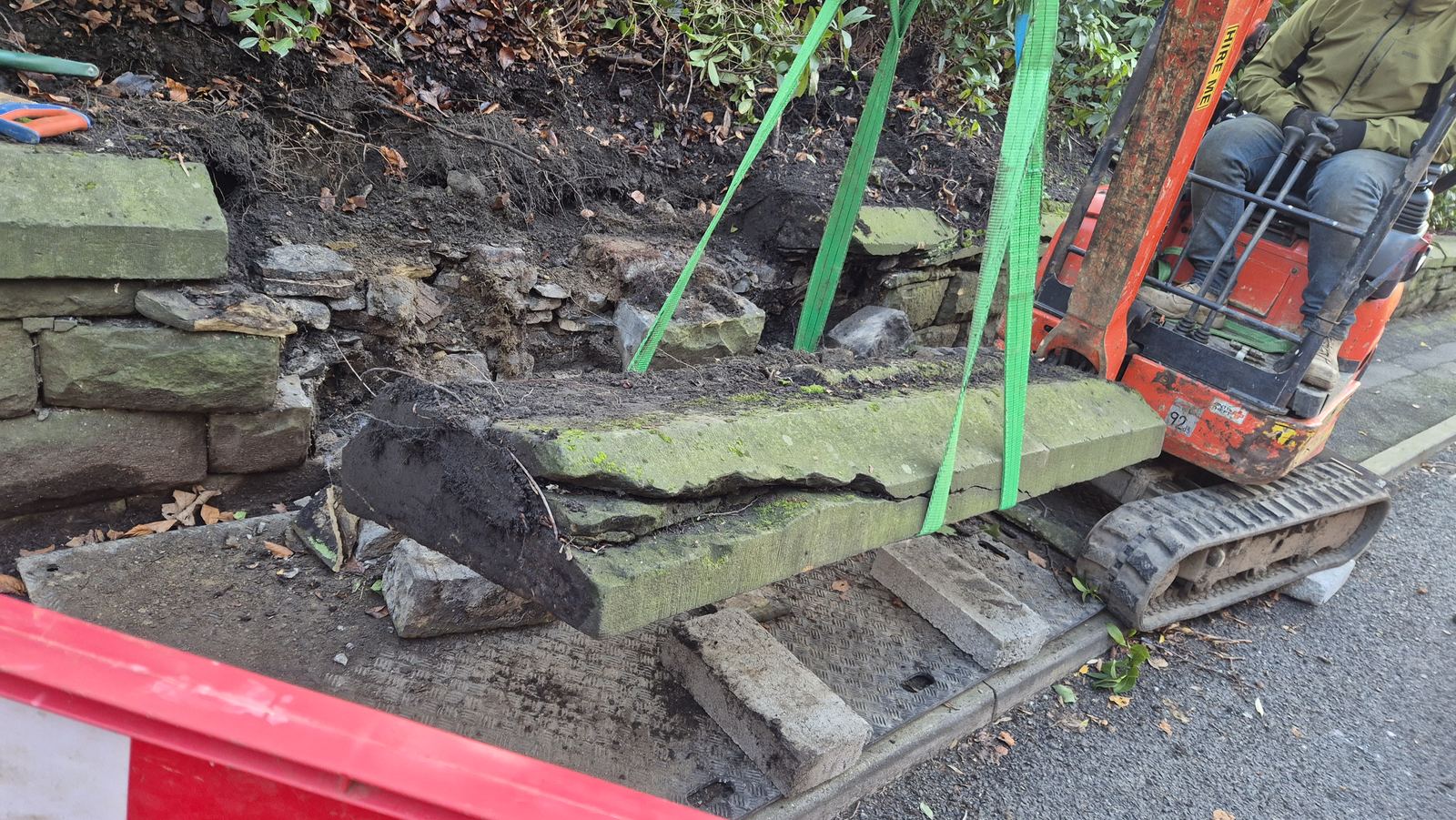
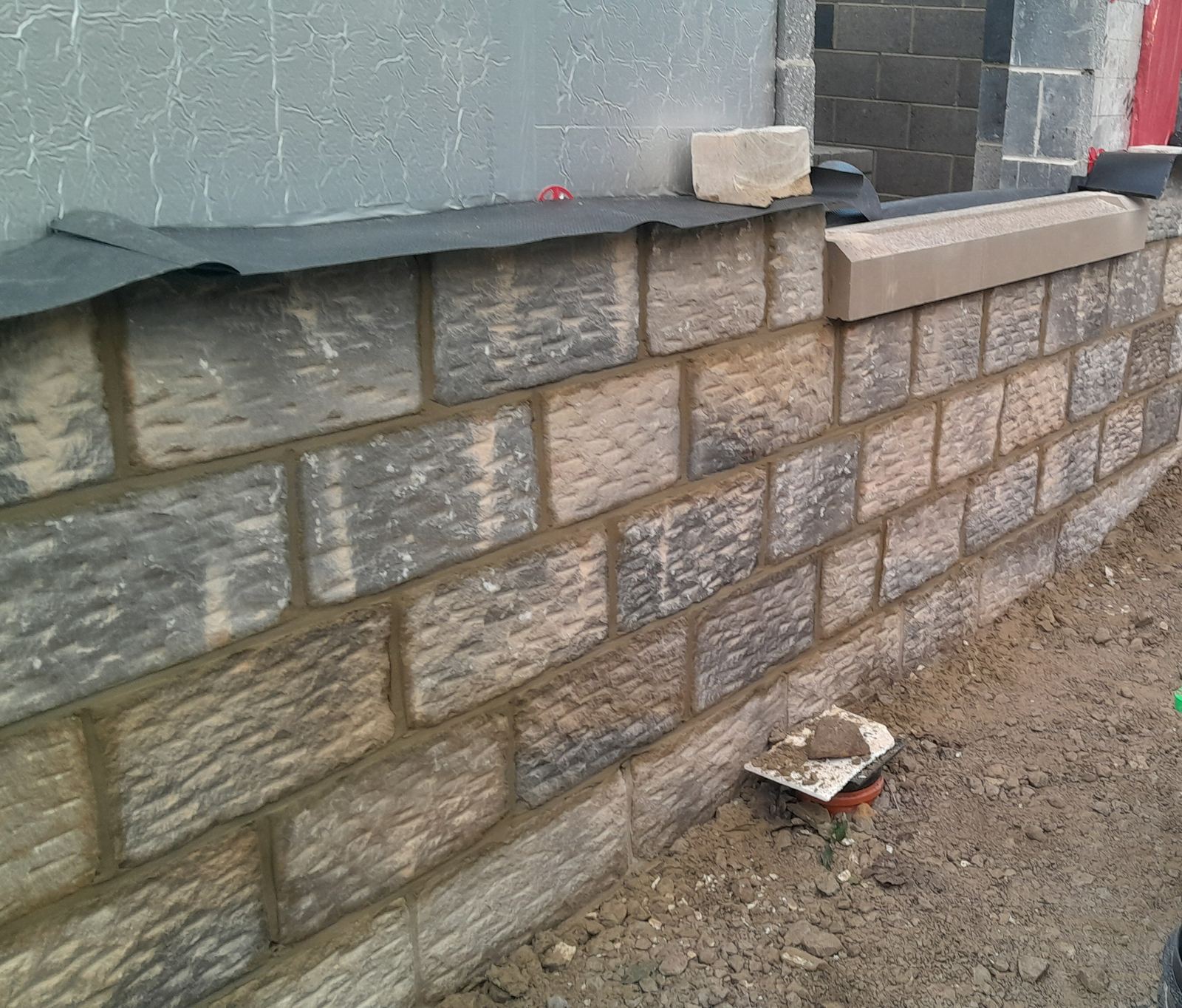
Get a written quote →An old roadside boundary wall that had leaned for years was taken down and rebuilt, day by day, in its own salvaged stone on a new concrete footing. The six days are set out below, so you know exactly what you are paying for.
Day 1
The old wall is taken down by hand, and every stone worth keeping is salvaged and set aside on the verge. Most of what comes off the wall goes back on it.
Day 2
A concrete footing is dug below frost depth and poured, because the original wall never had one. That is usually why an old wall begins to lean in the first place.
Days 3‑4
The salvaged stone is coursed back up, best faces out, with through-stones tying front to back so the wall stands rather than merely leaning more slowly.
Day 5
The top course is levelled off and new sandstone coping is bedded on, cut to the run of the wall.
Day 6
The joints are pointed in a lime mix so the wall can breathe, then cleaned down. The stone in it is the stone that was always in it.
Real projects
Every photograph here is ours, taken on our own projects. There is stone work this page describes that we have not yet photographed, dry stone walling and lime pointing in close detail, and we would rather leave it out than fill the grid with a stock picture of someone else's wall.
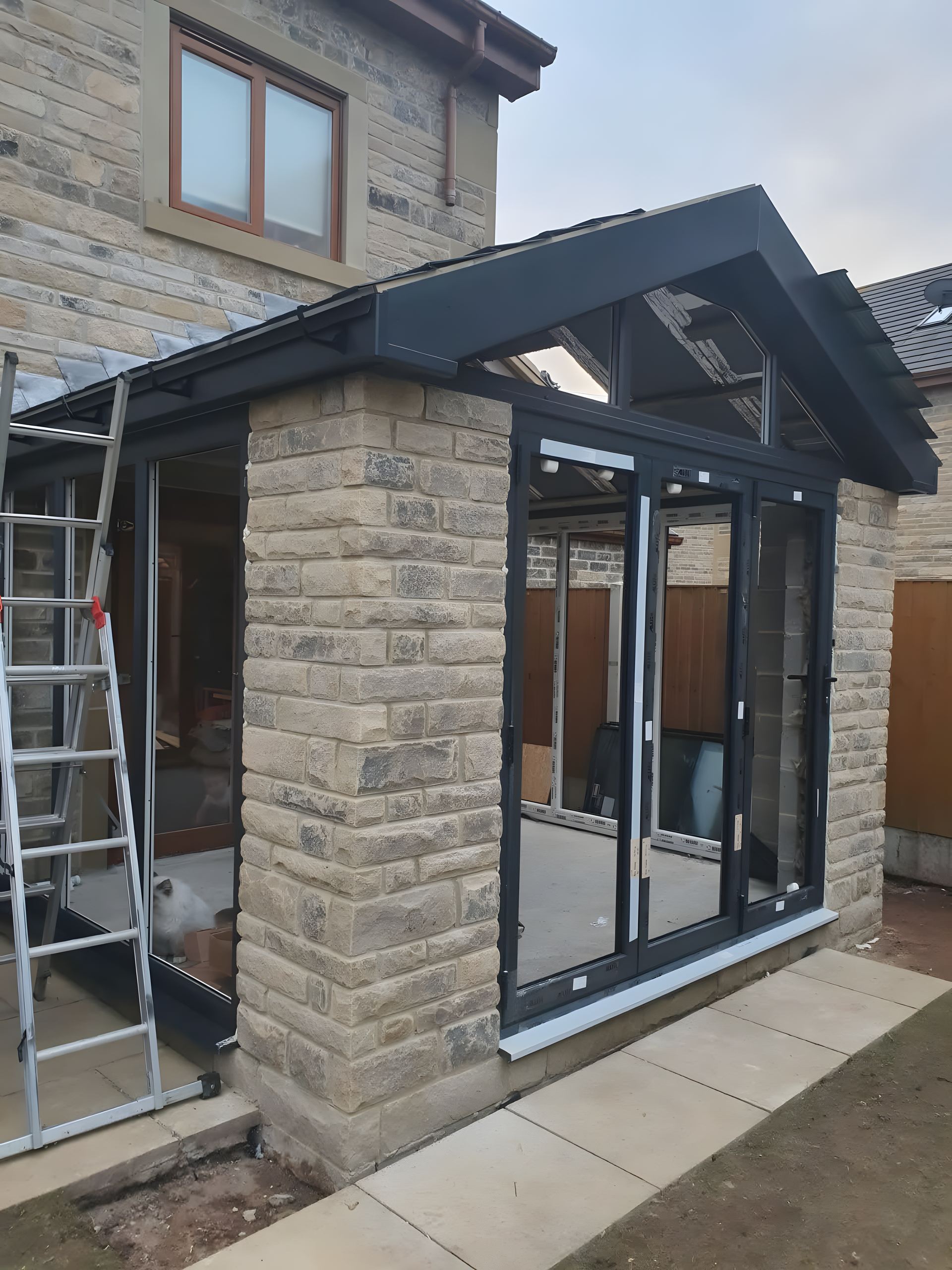
Piers and walls coursed in stone, matched to the house it sits against.
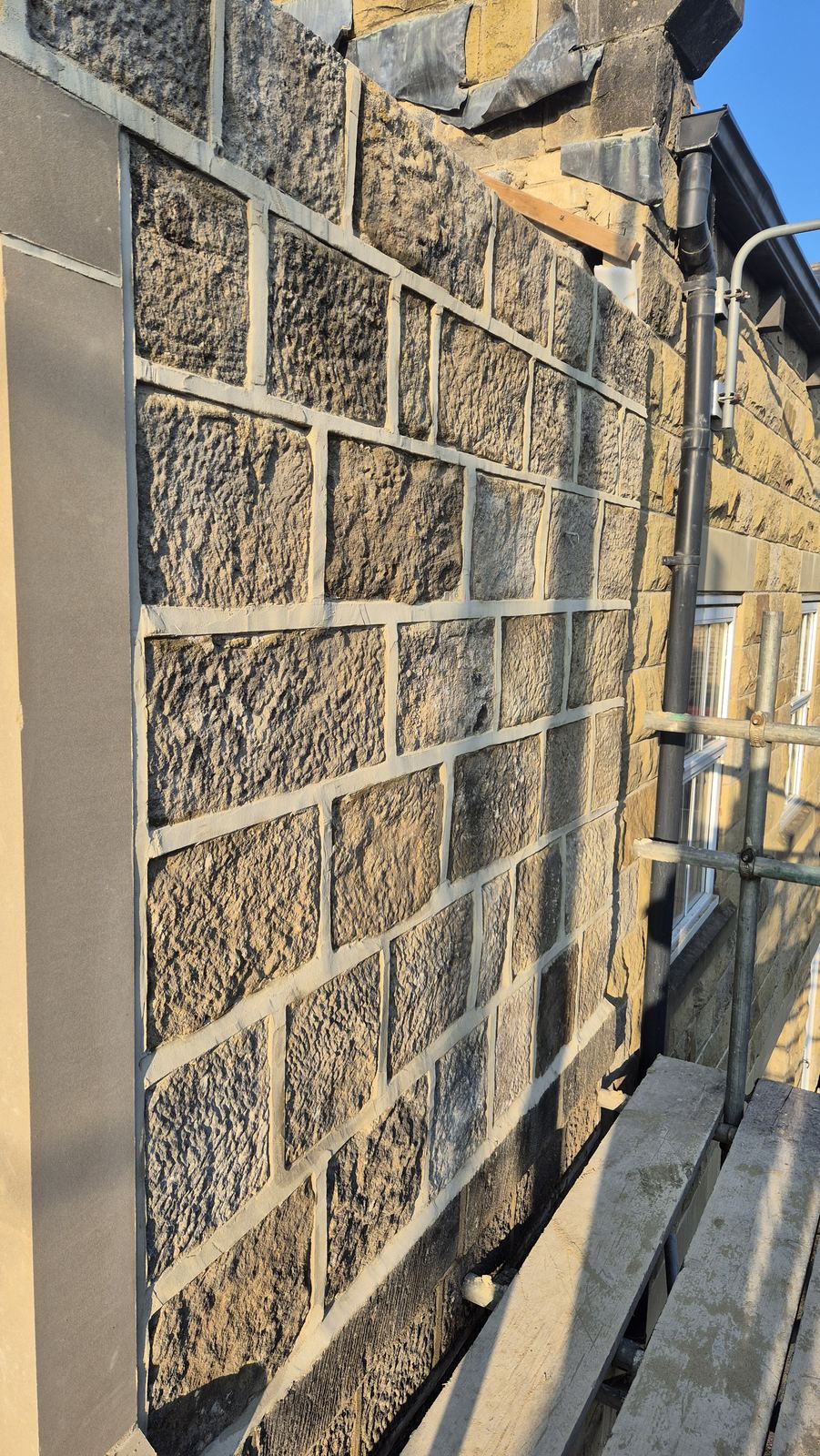
We inspect the stone in person before we put a price on it.
Get a written quoteor see the stone work in projects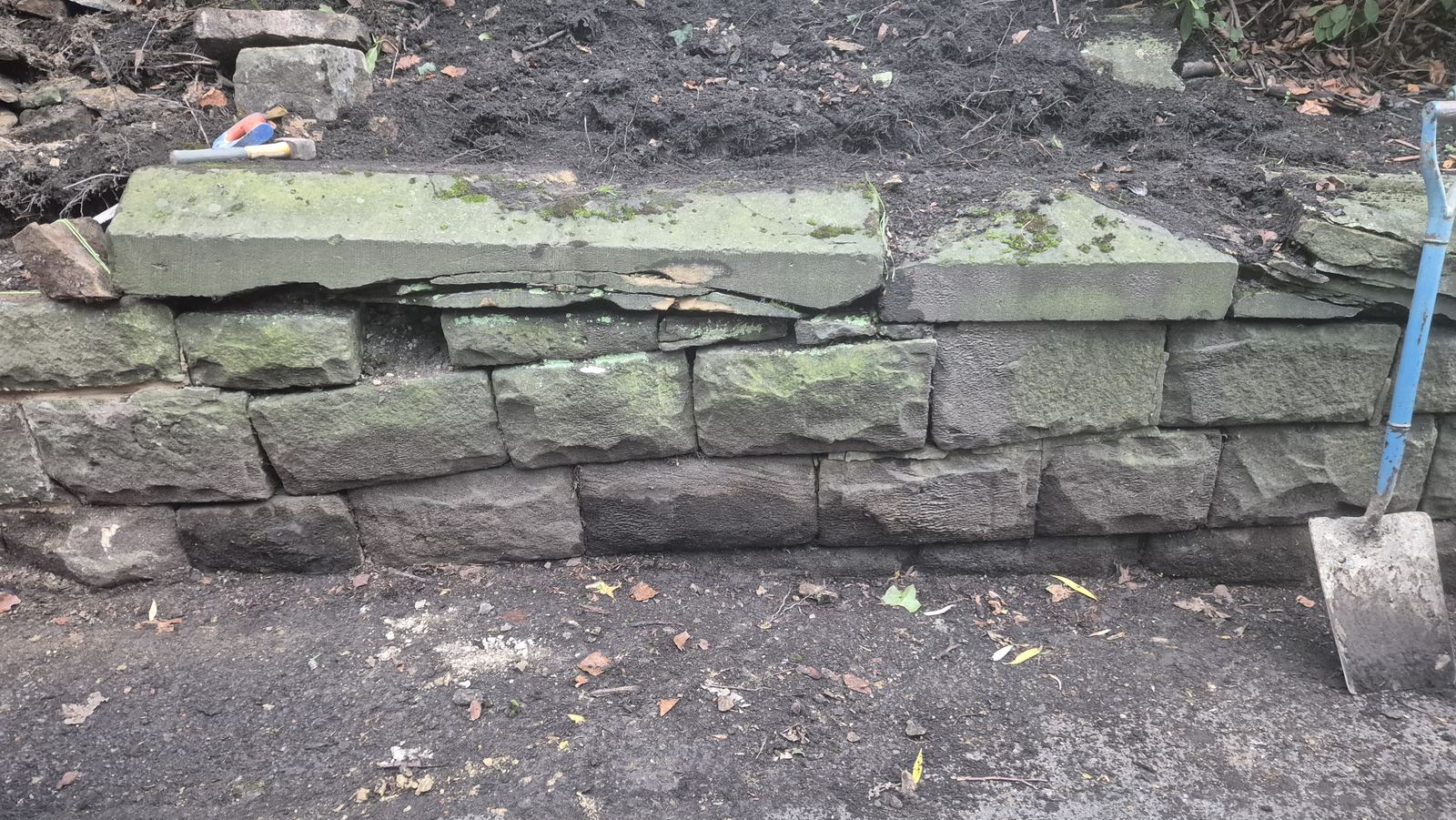
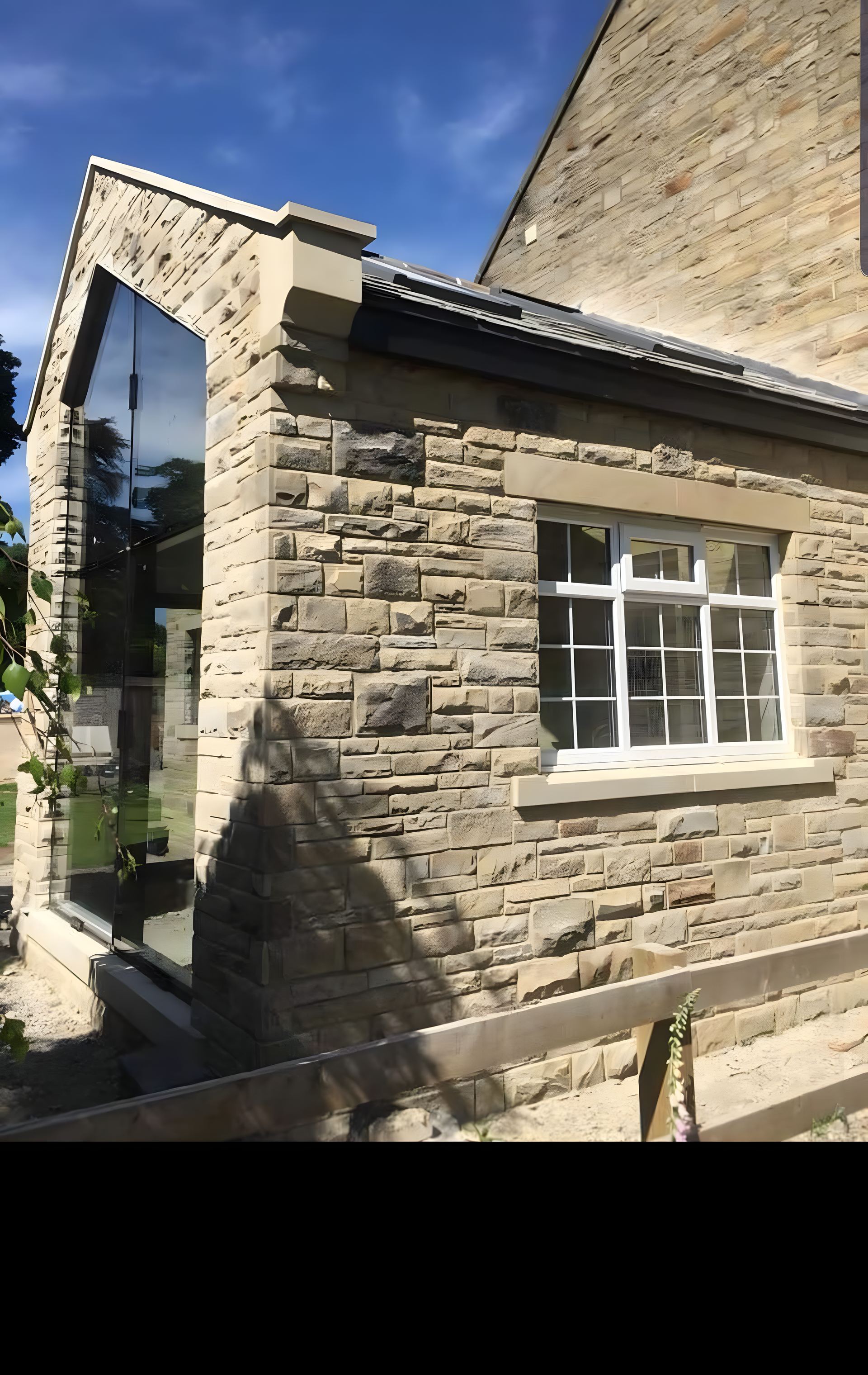
Where the stone work pays off most
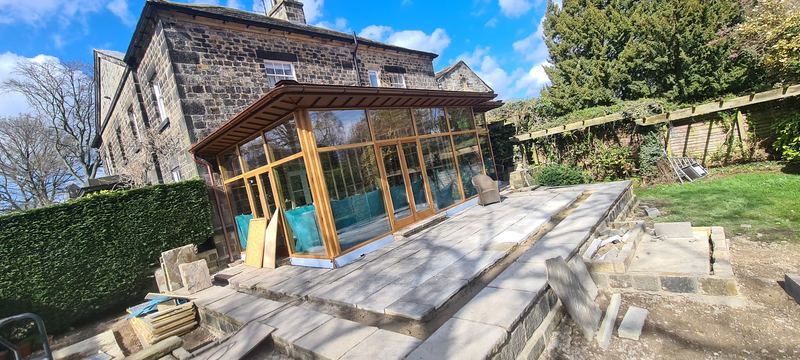
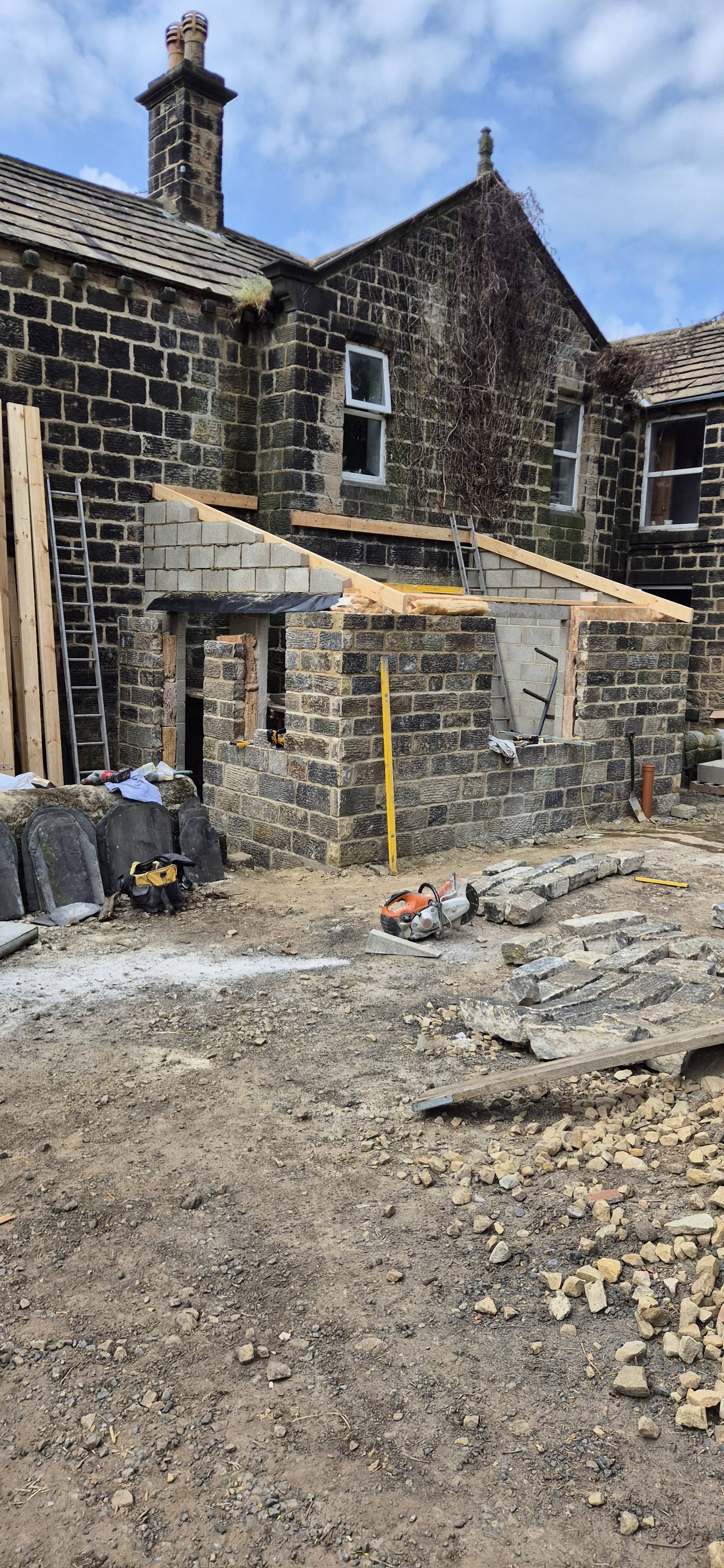
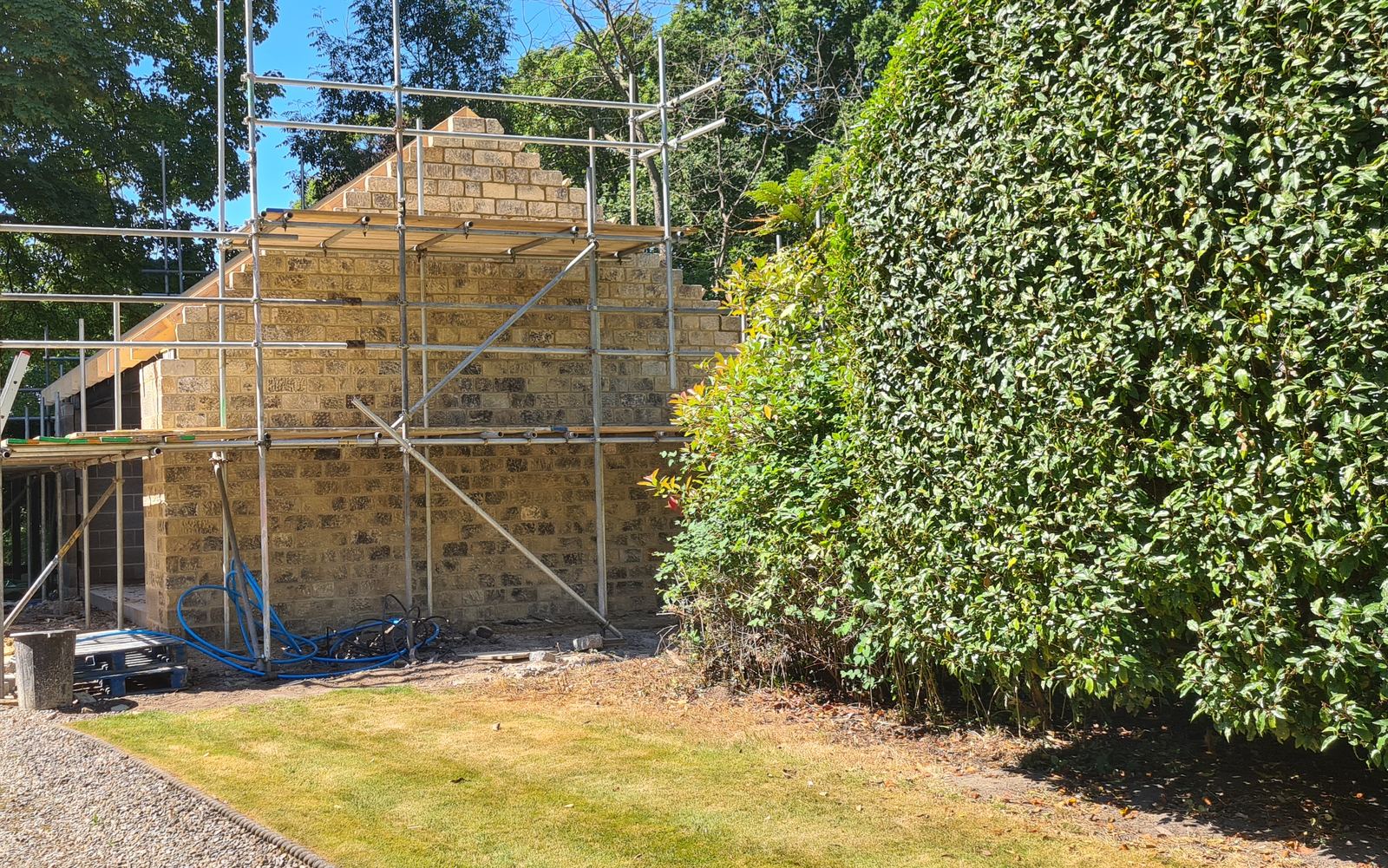
This corner is the same build as the extension in the hero at the top of this page, photographed mid-construction: the new stone still rising against the weathered stone of the original house. The hero shows it finished. The stone is what makes the join disappear. The rest of the project is an extension like any other, architect designed and inspected at every stage.
How an extension runsWhy we're the right fit
A wall built without through-stones, or pointed in cement where lime was needed, will look sound for a few winters and then begin to fail. These are the questions worth putting to any mason before work begins.
Common questions
Other services
One team, one standard of workmanship, across everything we build.
If you are unsure which material suits your house, send a photograph of the wall or the elevation and we will advise which way we would go.
Send a few photographs of the wall, the garden or the side of the house, and we will carry out a free site visit. You will receive a written, itemised, fixed-price quote, and a clear answer on whether reclaimed or new stone is right for the project.
Or call 07743 342155