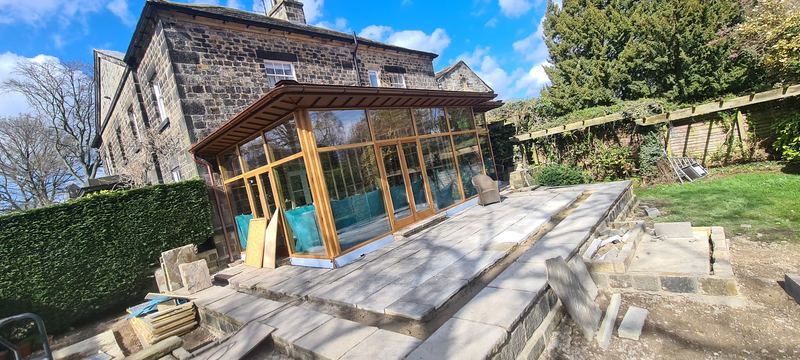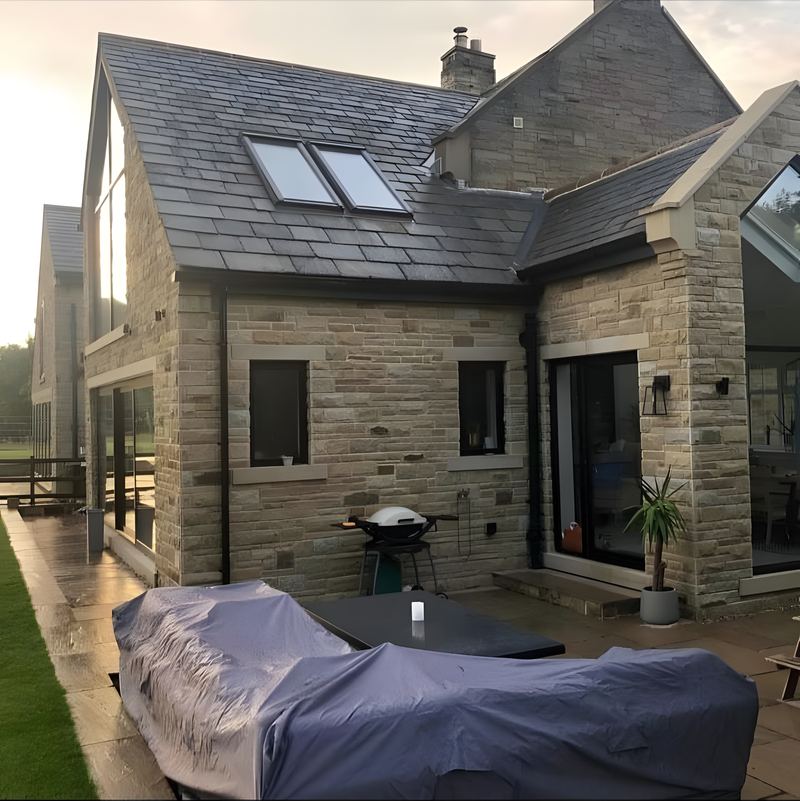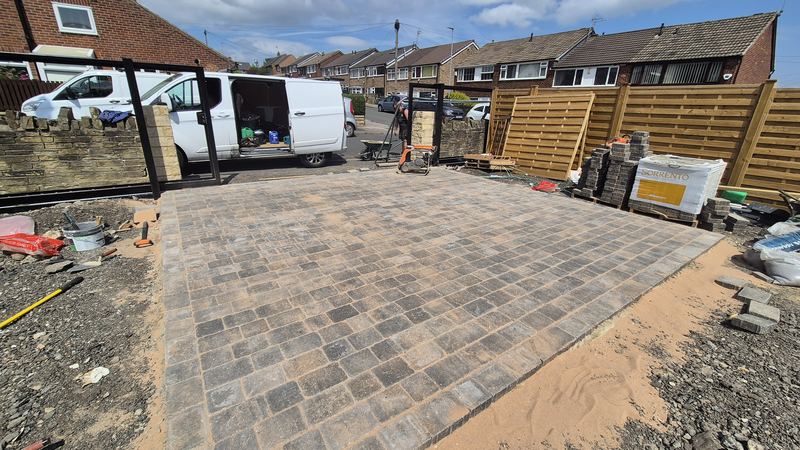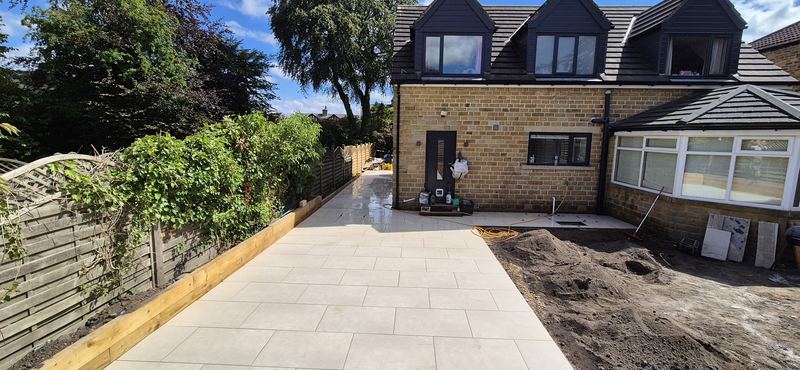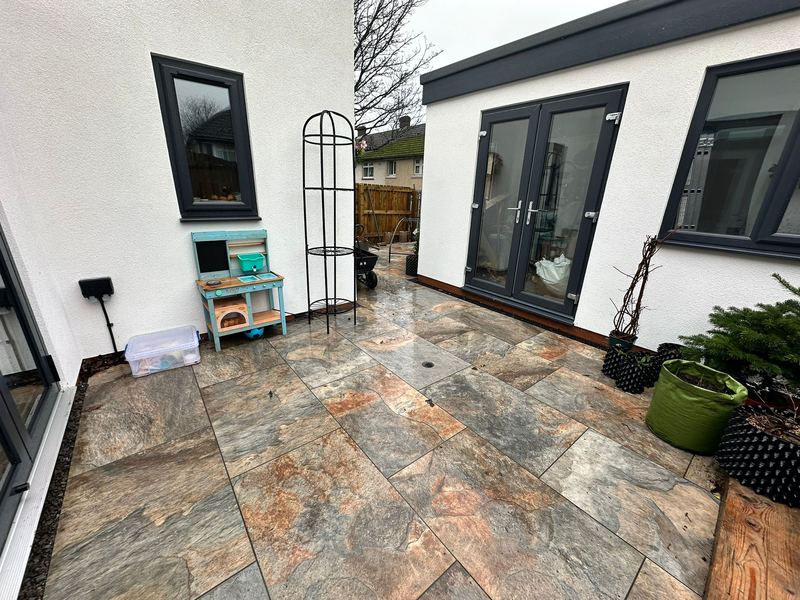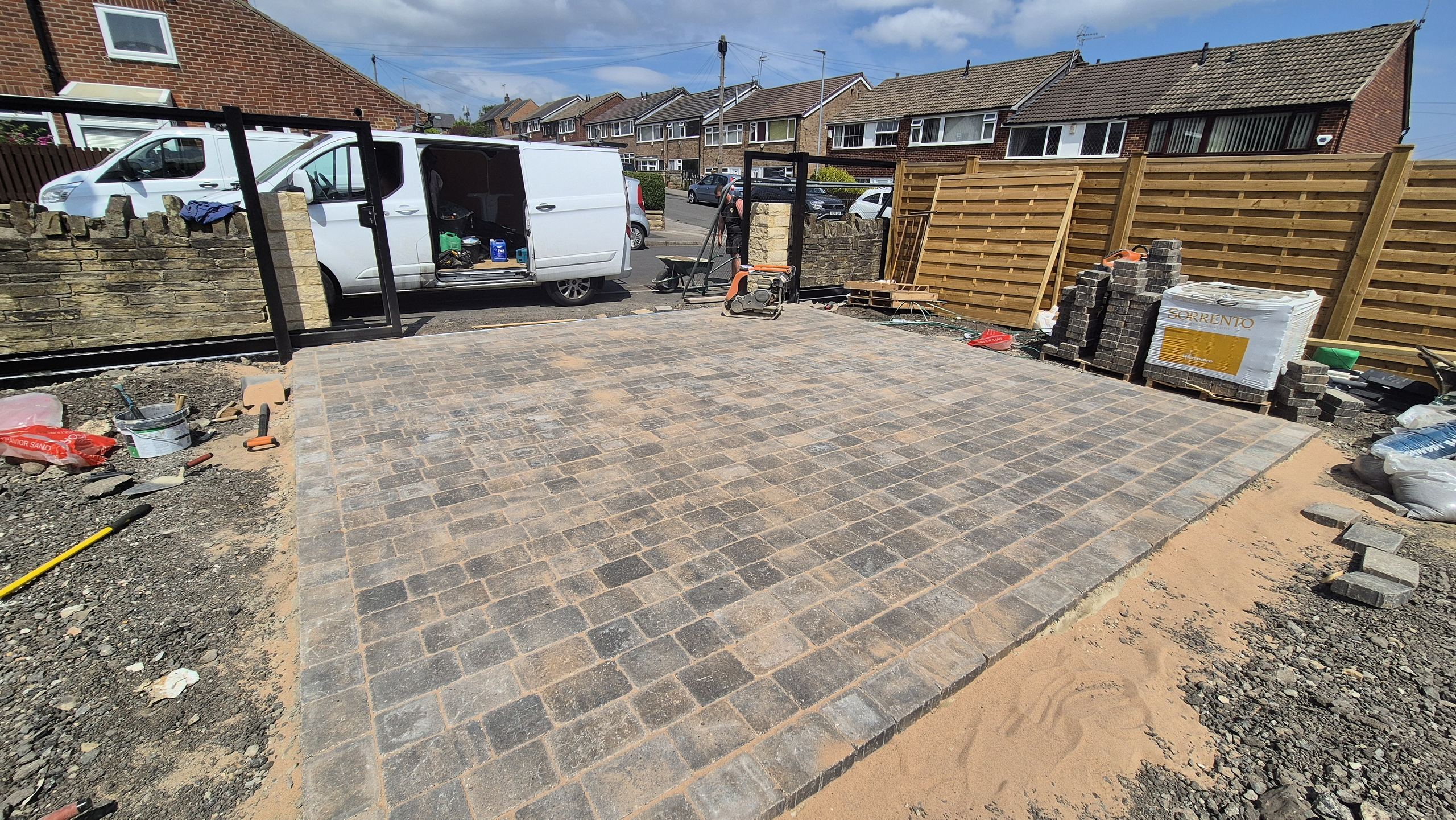
Block paving, Indian stone flags and gravel, excavated to firm ground and laid to drain. We build the base correctly so the surface stays where it is laid. Written, itemised quotes from the team who will carry out the work.
What we do
Most of the work sits below anything you will ever see. Build that part correctly and the driveway stays flat for years to come. Neglect it and no surface can save the project.
We lay block paving, Indian stone flags and gravel across Leeds, on everything from a tight terrace frontage to a wide double driveway. The same small team works on every project, a written, itemised quote is agreed before we start, and the site is left clean when we finish.
Materials
The surface is the part you see, so it is the part people focus on. Whichever of these you choose, the excavation and sub-base are built the same way.
Read more on the materials
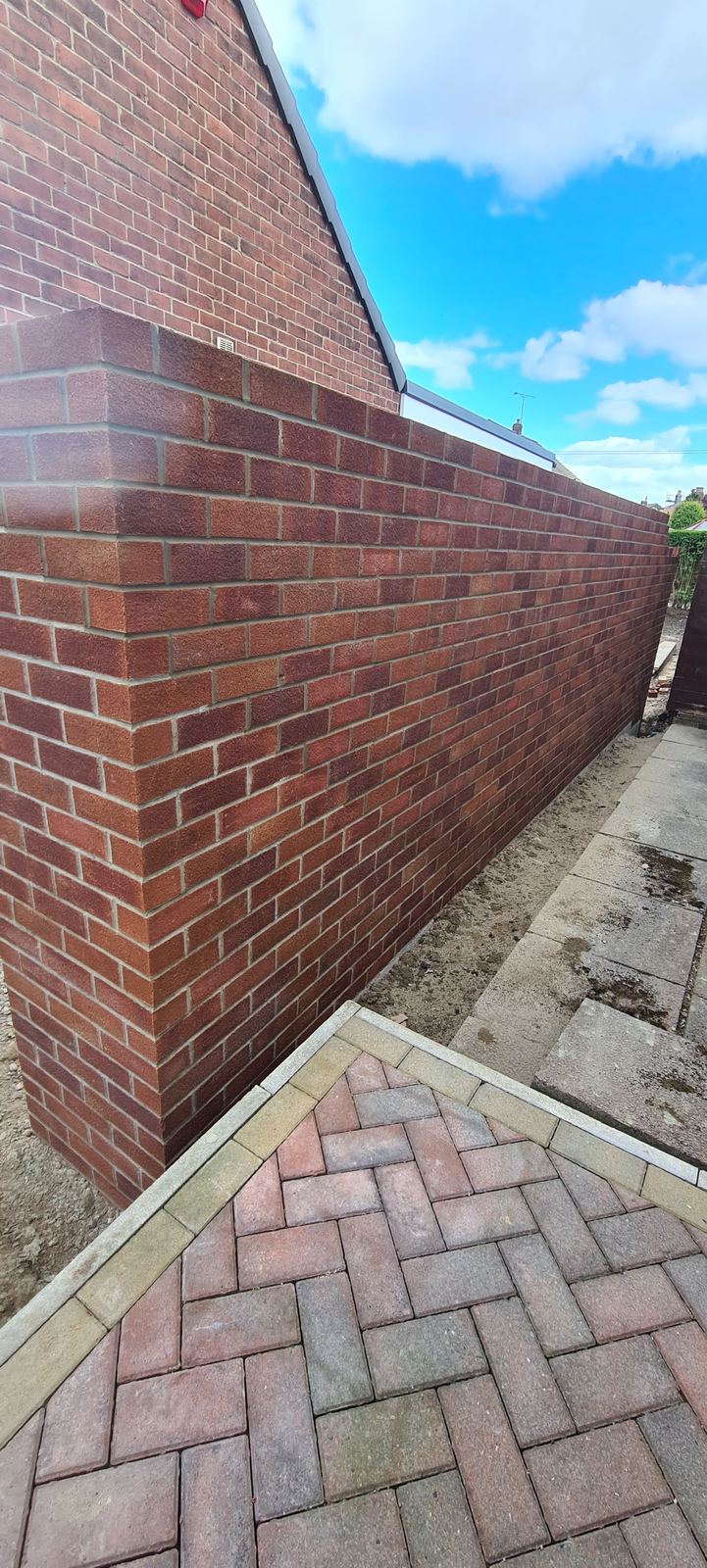
Concrete or clay blocks are laid on a screeded sand bed, with the edges haunched in. It is the most popular driveway we lay, and one that can be lifted and relaid in patches if a drain or cable ever needs to be reached.
More on how we lay block paving →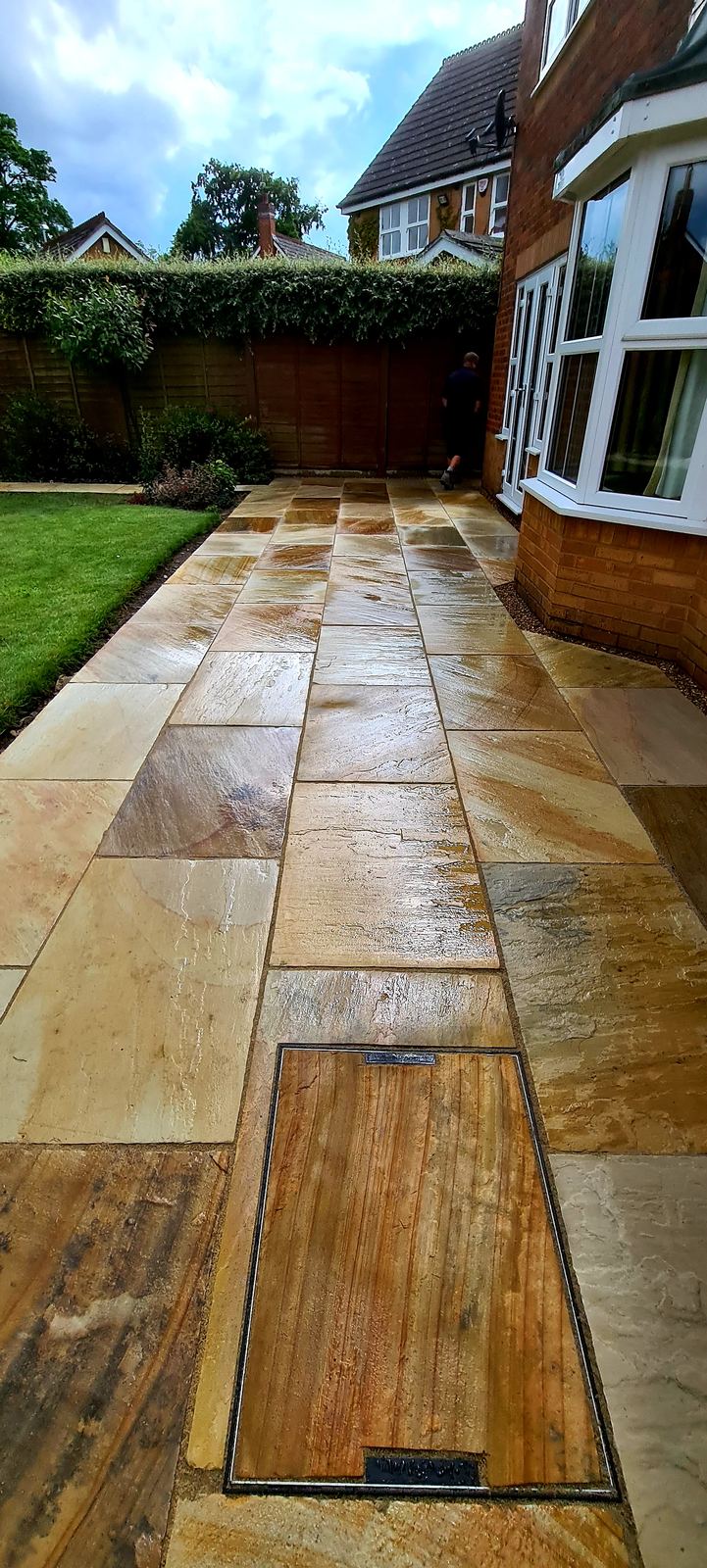
Large-format riven Indian sandstone is laid on a full mortar bed. It is the most expensive of the three and the best looking on the right house. More detail is given below.
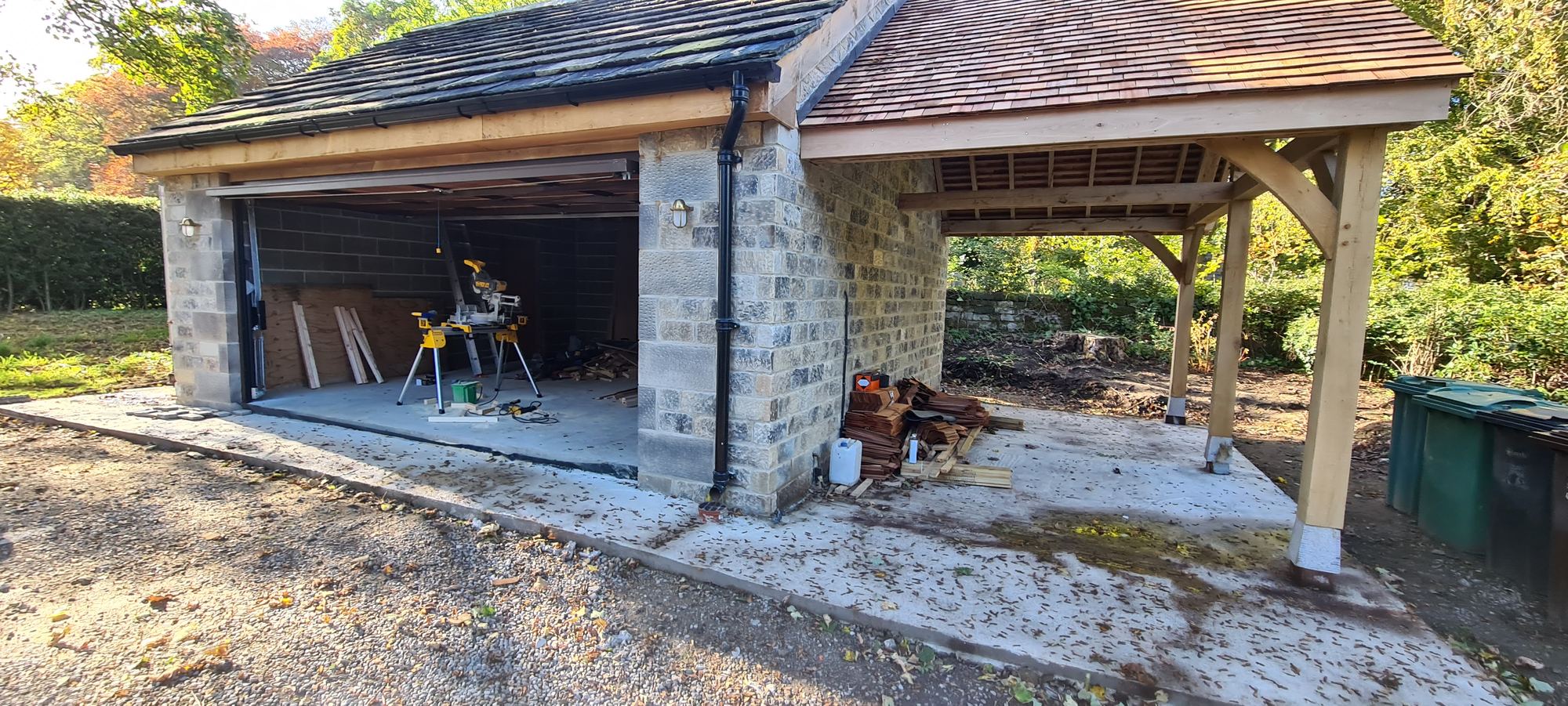
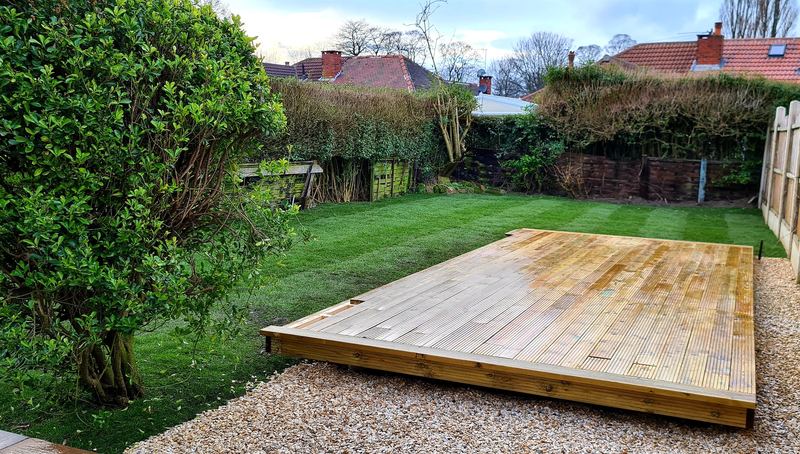
Loose aggregate is laid over a gridded or bound base. It is the cheapest surface to lay, quick to install and easy to top up. It needs well-set edging to hold it in place, which is where DIY gravel drives usually go wrong.
Unsure which surface suits the house? Send a few photographs of the driveway and we will advise you honestly.
Get a written quote →A premium option, built properly
A patio flag is not a driveway flag. For a driveway we use the heavier calibrated stone, on a full mortar bed over a properly compacted sub-base, with the joints pointed to carry the weight of vehicles rather than feet. Kandla grey, raj green or mixed buff, whichever suits the house. It is the same craft as our flag patios, built for a heavier duty.
More on our Indian stone work →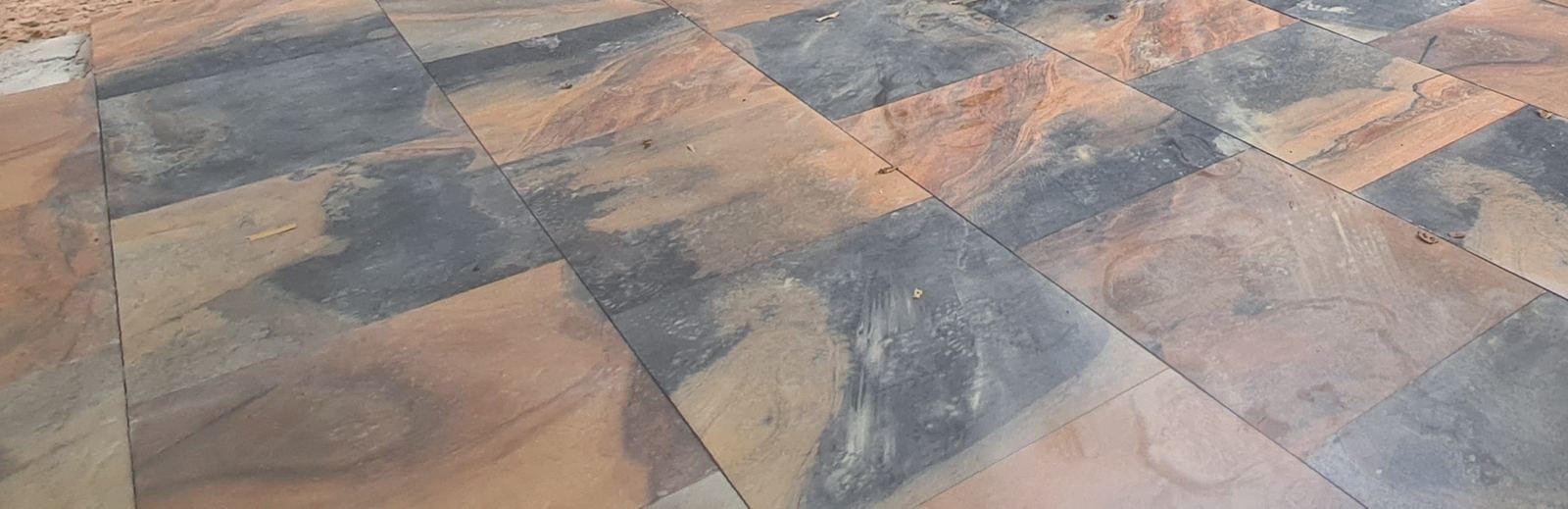
Why people choose it
If your driveway is flat, drains away from the house and simply looks tired, tell us at the site visit. A wash and fresh jointing sand is a very different conversation to a full excavation.
We would rather tell you it has years of life left than sell you work you do not need. The driveways worth replacing are those that have failed underneath, and that is usually clear once we inspect it.
Real projects
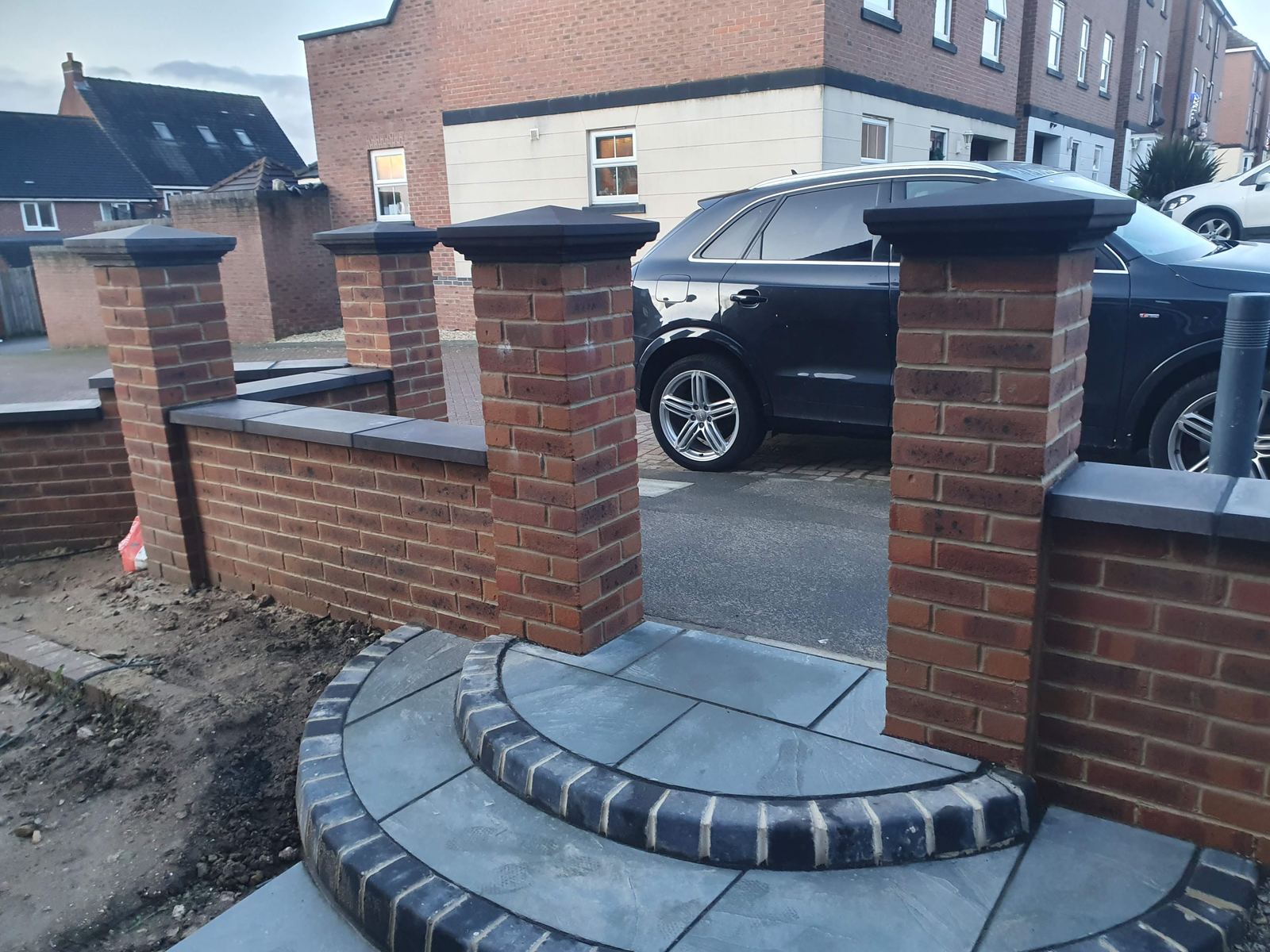
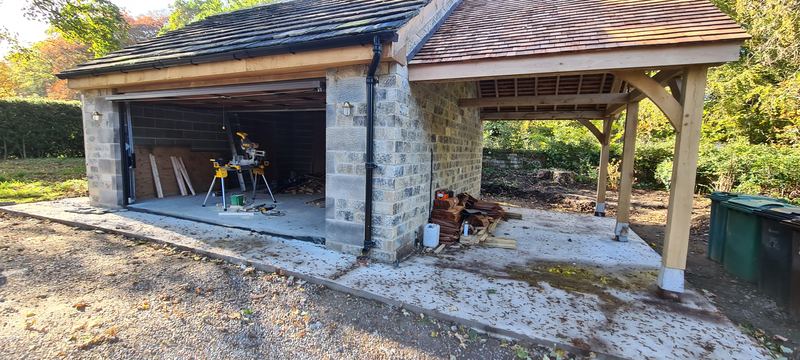
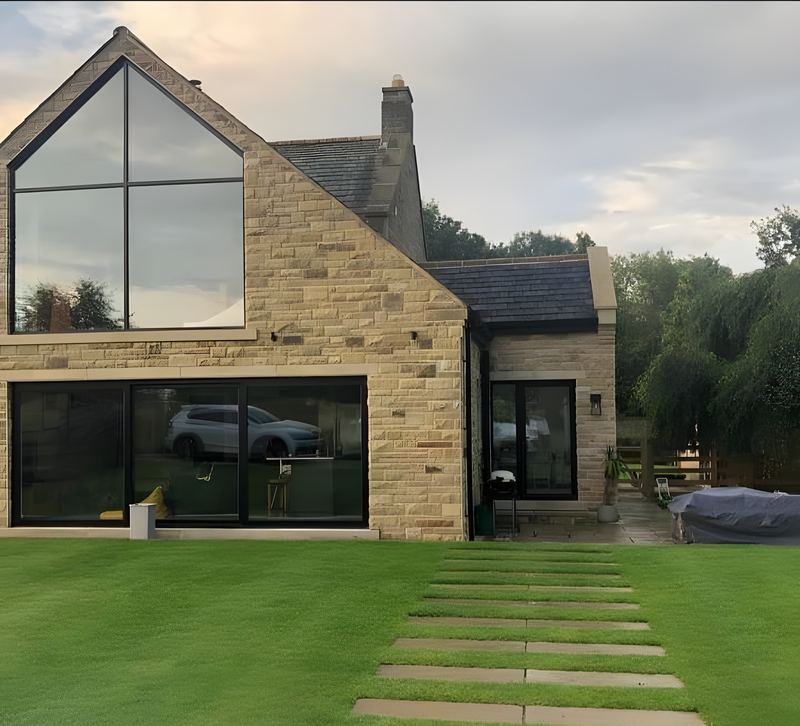
Our own photographs of our own projects. If we show it, we built it.
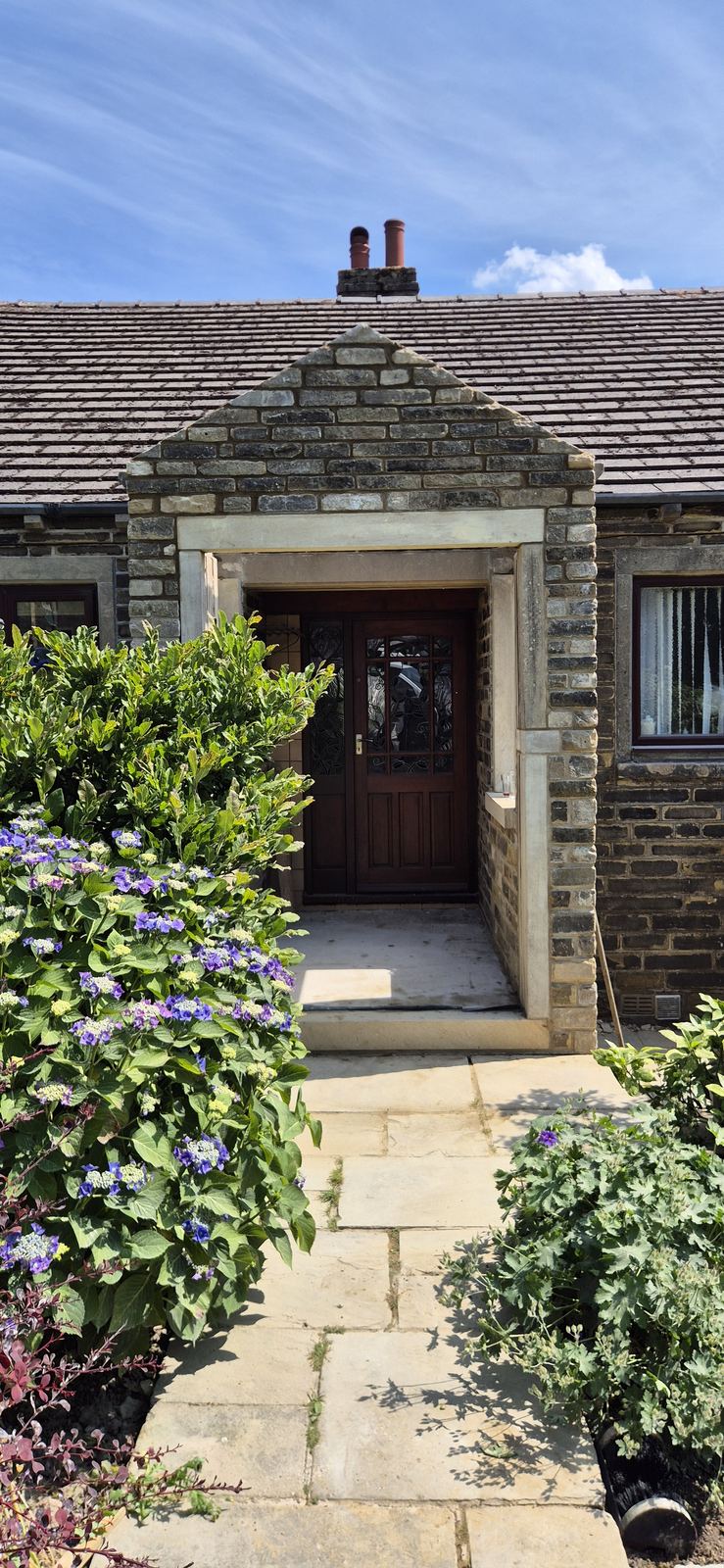
Indian stone flags to the front door
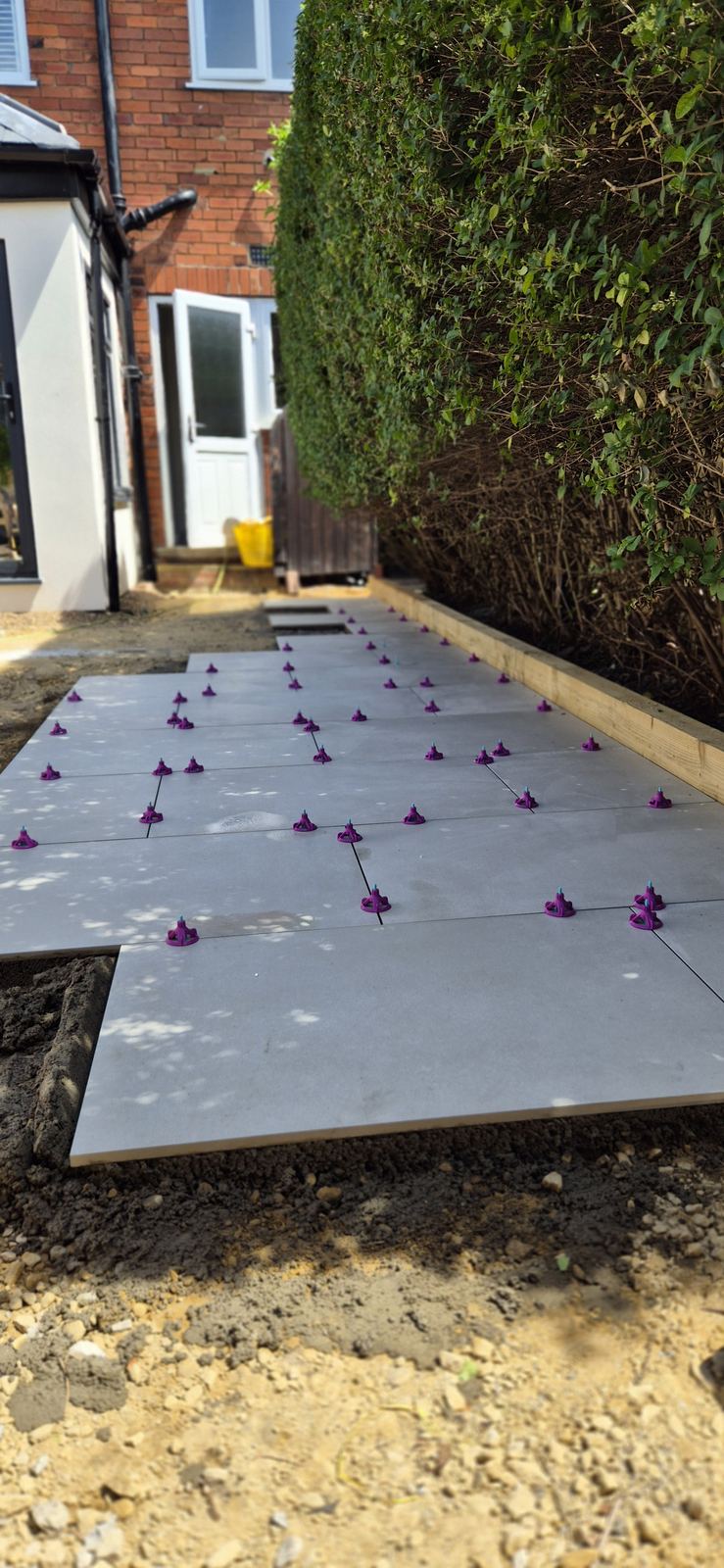
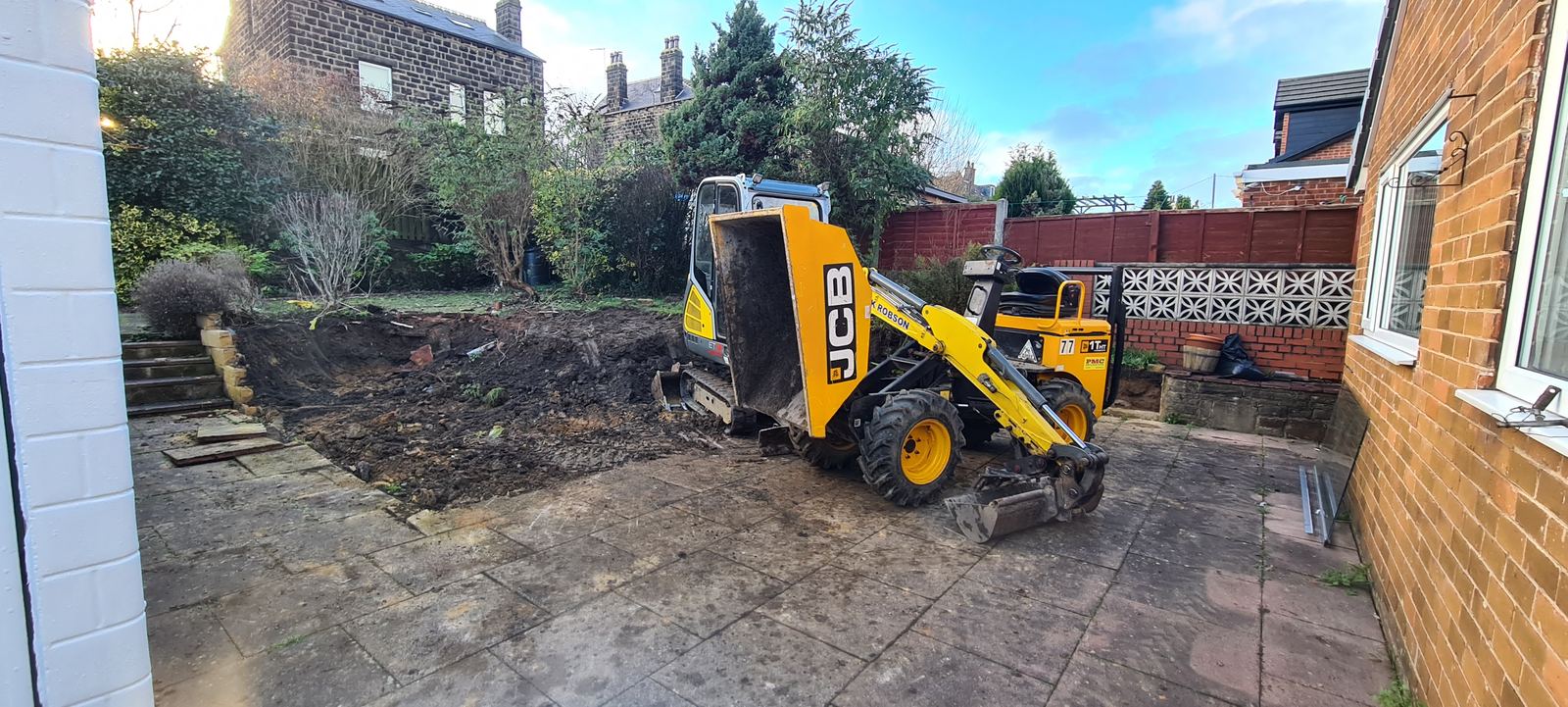
Where every driveway starts
Measured on site and itemised line by line.
Get a written quoteor view more driveways in our projectsLaying blocks is the straightforward part. The reason driveways fail is nearly always beneath the surface. This is the order we work in, on every driveway.
Laying blocks is the straightforward part. The reason driveways fail is nearly always beneath the surface. This is the order we work in, on every driveway.
We strip the old surface and excavate to firm ground, usually 200 to 250mm for a car driveway, deeper where the ground is soft or vans will use it. The spoil is removed by grab lorry or skip, not left in a heap on the verge.
MOT Type 1 crushed stone is laid and compacted in layers with a plate compactor. This is the layer that carries the weight. If it is skimped, the surface sinks or cracks within a winter or two, whatever sits on top.
Every edge is set on concrete and haunched, so the driveway cannot spread or creep. Blocks laid without a restrained edge work apart at the sides. It is the first corner a cheaper quotation tends to cut.
The whole driveway is laid to a fall, roughly 1:60, directing water to a channel drain, a soakaway or a permeable build-up. Since 2008 a new front driveway cannot discharge its water onto the road, so we build the drainage in.
Blocks are laid on a screeded sharp sand bed, flags on a full mortar bed, or gravel over a gridded base. We cut in cleanly around manholes and thresholds, lock the joints, and leave the site swept and clean.
That is how we would build yours. Tell us the rough size of the driveway and we will visit to measure up.
Get a written quote →That is how we would build yours. Tell us the rough size of the driveway and we will visit to measure up.
Get a written quote →Guaranteed for 5 years
A 5-year workmanship guarantee on the groundworks: the excavation, the compacted sub-base, the edge restraints, the laying and the drainage. Whatever surface goes on top, that build-up decides whether the driveway stays flat, and it is the work we put our name to. Manufacturer product warranties on the paving run alongside.
What it costs
We will not attach a single headline figure to a driveway and pretend it means anything. The only number worth quoting up front is the market average for gravel. The rest we price by the square metre once we have surveyed the work.
What's included
Two quotations for the same driveway can look entirely different because they cover different things. This is where ours starts and stops, so you know what you are comparing.
Most driveways take a few days to a couple of weeks on site. The timescale is confirmed in writing with the quote.
Common questions
Other services
One team, one standard of workmanship, across everything we build.
If your existing driveway is sound underneath, we will say so. A dig-out you did not need is the most expensive thing we could sell you.
Tell us the rough size, the surface you would like, and where the water runs now. We will visit to measure up, then send a written, itemised, fixed-price quote with a start date we can stand behind.
Public liability £5m · written, itemised quotes · 5-year workmanship guarantee in writing.
Or call 07743 342155Prefer WhatsApp or email? All the ways to reach us.