Home / Services / Patios & paving / Porcelain
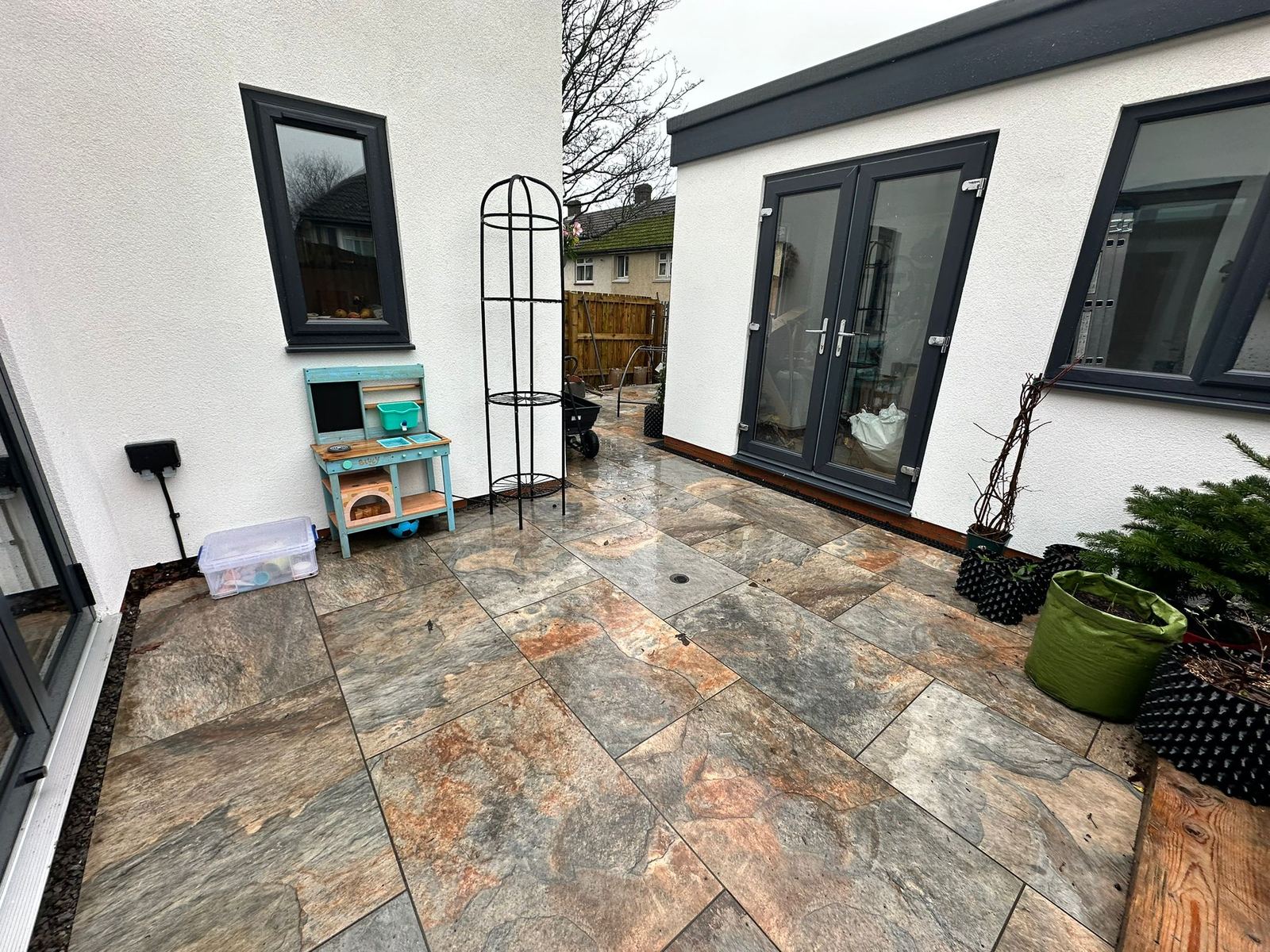
Large-format 20mm porcelain, primed and bedded on a full mortar bed, with mitred cuts and precise, consistent joint lines. Porcelain shows every shortcut, so the laying is where the quality lies.
What it is
The work itself is patio work: excavation, sub-base, falls, bedding, cutting and jointing. What changes with porcelain is the tolerance. Every tile is the same size and completely flat, so the ground it sits on has to be built as true as the tile is.
That cuts both ways. Laid correctly, it is the most consistent surface you can put in a garden. Laid in a hurry, it is the least forgiving.
In plain English
Outdoor porcelain is a fired ceramic tile, made to a set size and finish rather than split from a quarried block like natural stone. It absorbs almost no water, which is why it does not stain or fade and resists frost, and why it must be primed on the back to bond to a mortar bed at all.
Materials
Porcelain is sold on the tile, but half of what you are paying for is the bed beneath it and the primer that bonds it. This is the spec we work to on every porcelain patio.
Half of that list is work you will never see. Ask what is going under yours before you compare prices.
Get a written quote →Why people choose it
Porcelain is the right choice for many gardens, and the wrong one for some. Here are both sides, before you commit.
What it's good at
Anthracite grey remains anthracite grey. Twenty years on, it looks as it did the day it was laid.
There is no sealing or re-sealing, and no porous surface for moss to take hold in. A brush and an occasional wash are all it needs.
Large, flat, near-identical tiles with crisp edges suit a modern extension, grey render or anthracite windows better than any natural stone can.
The honest downsides
Porcelain does not hold warmth the way natural stone does. Barefoot on a spring morning, it feels cool. If that matters to you, sandstone is the warmer surface.
Porcelain will not flex. Where a natural stone patio might tolerate slight ground movement, porcelain shows it as a cracked tile or a lifted joint. The base must be right, and that is where the labour goes.
On a uniform tile there is nowhere to hide a chipped edge or a wandering joint line. Porcelain rewards careful cutting and punishes rushed work, so who lays it matters more than with riven stone.
Real projects
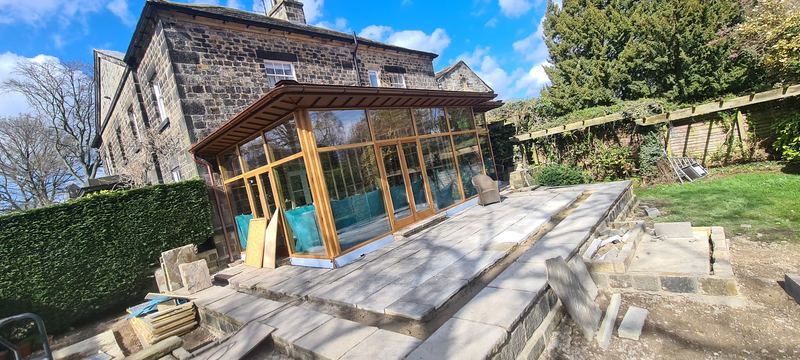
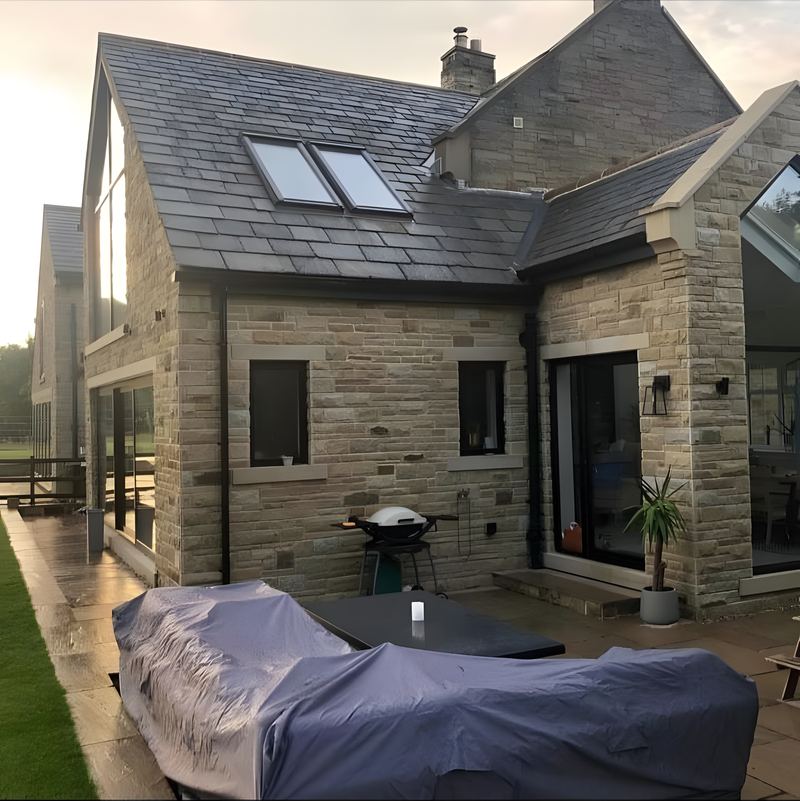
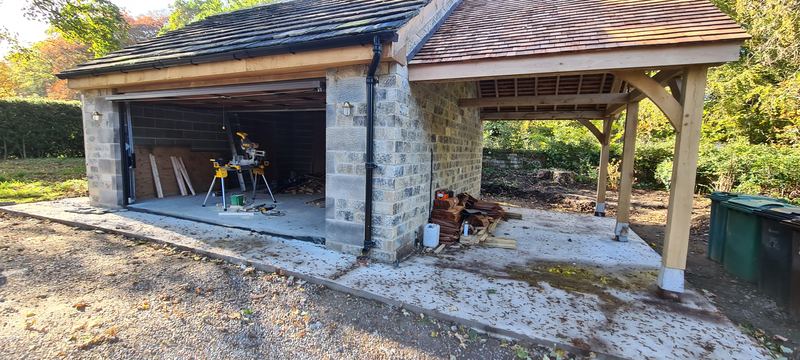
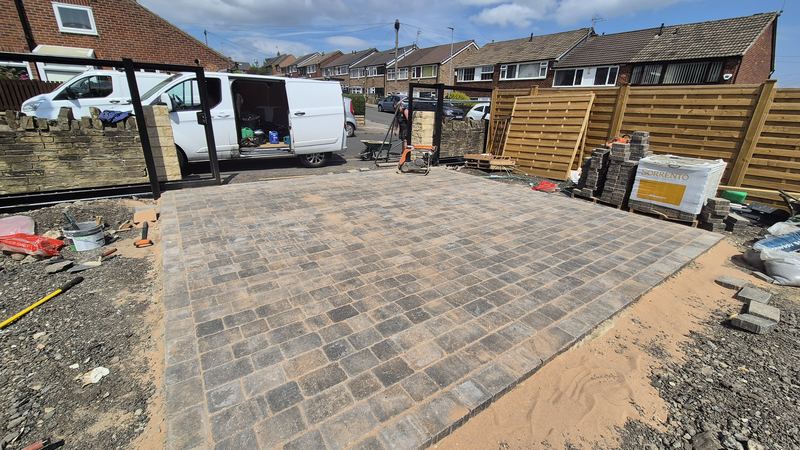
These are close-ups from our own projects, at the details where the quality of the laying shows.
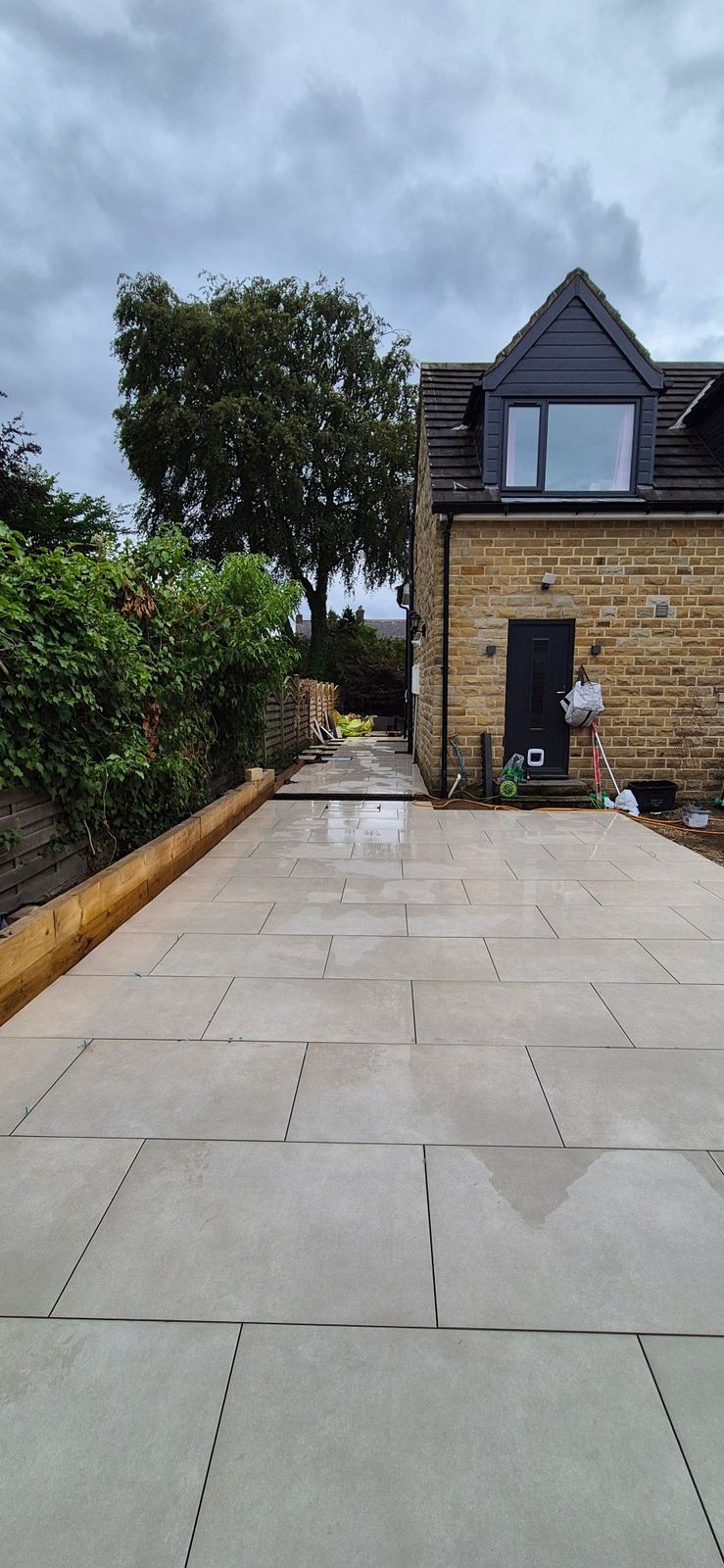
All photographs are of our own work. If we show it, we built it.
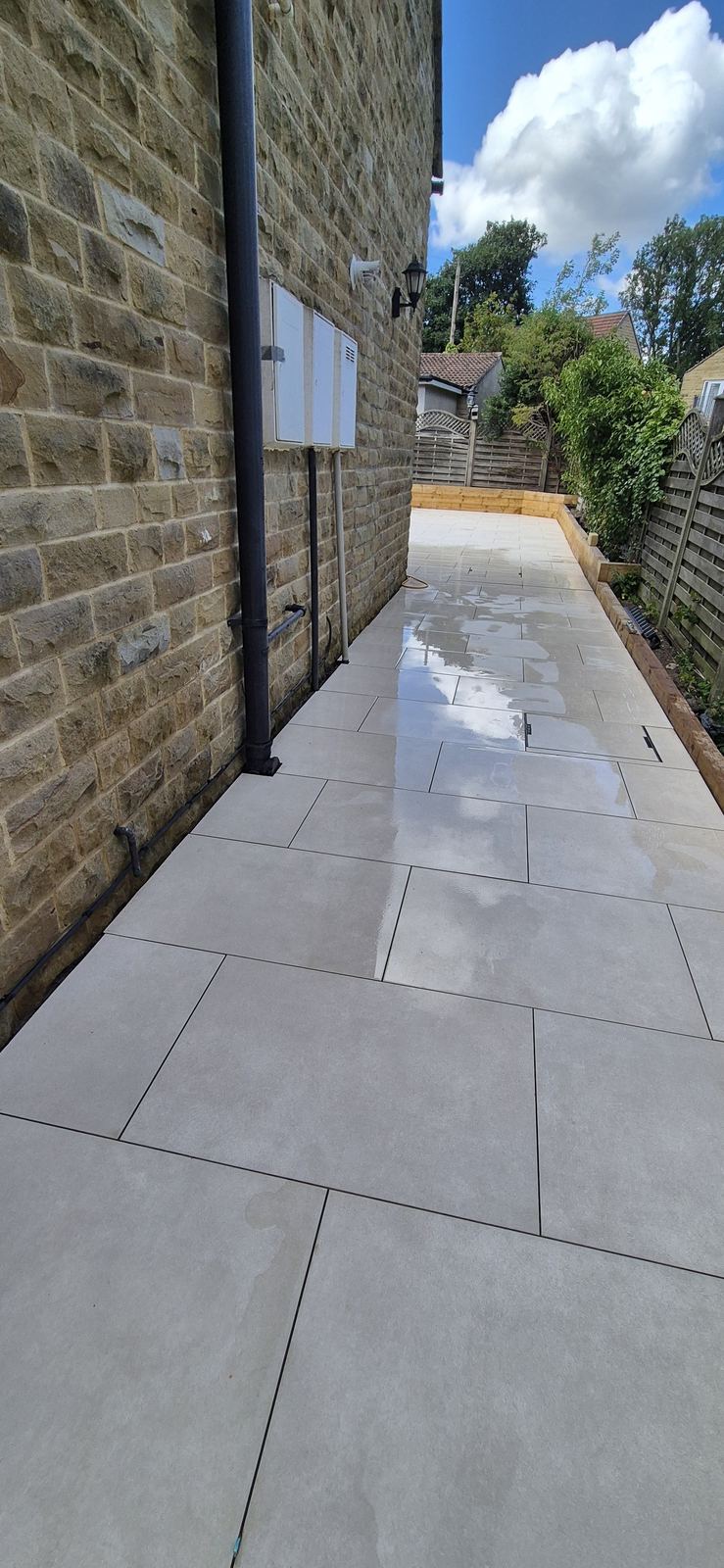
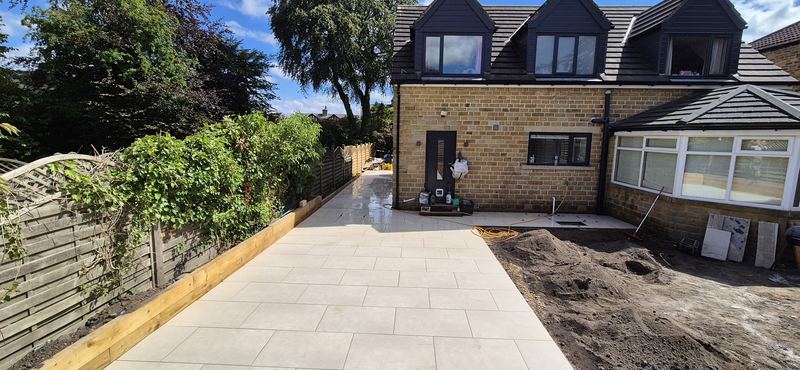
The side of the house receives the same care as the patio
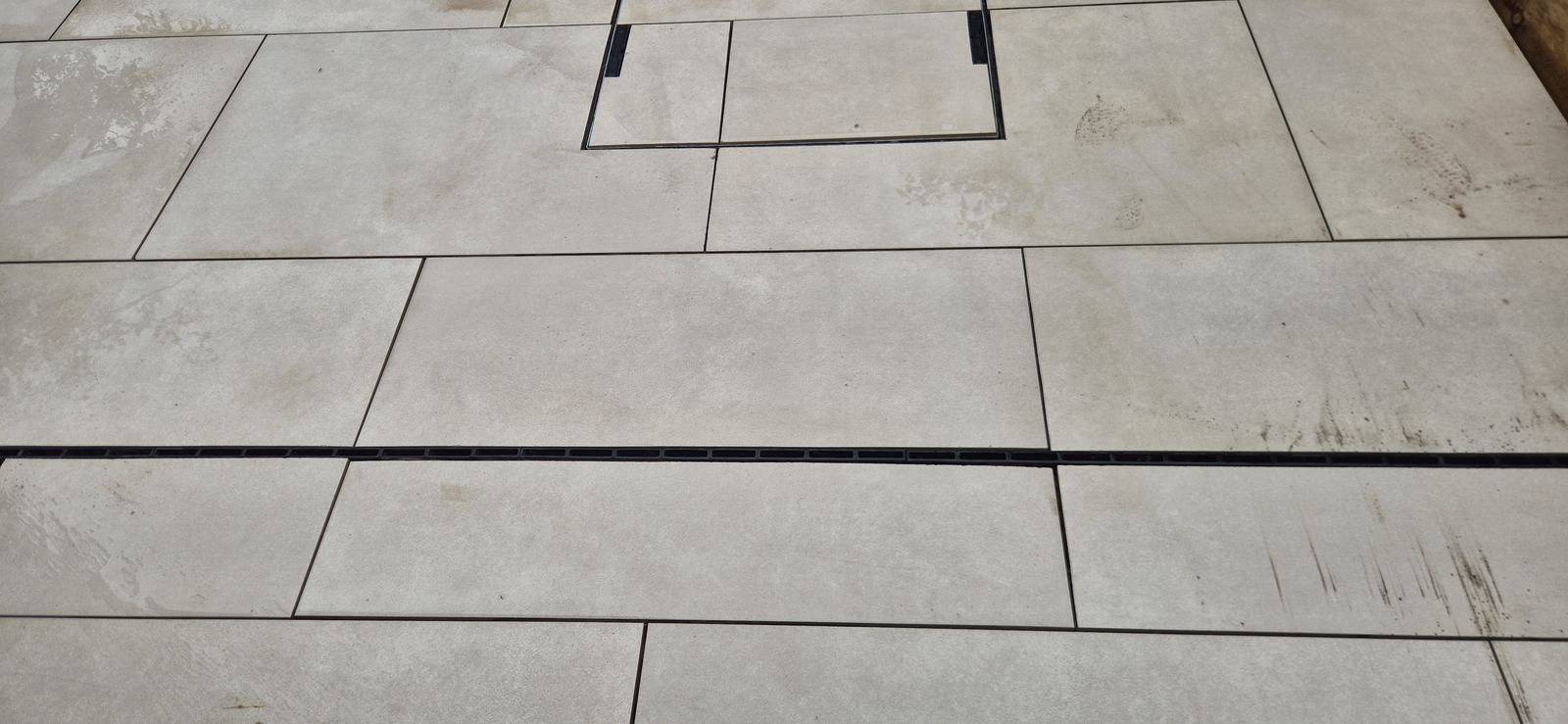
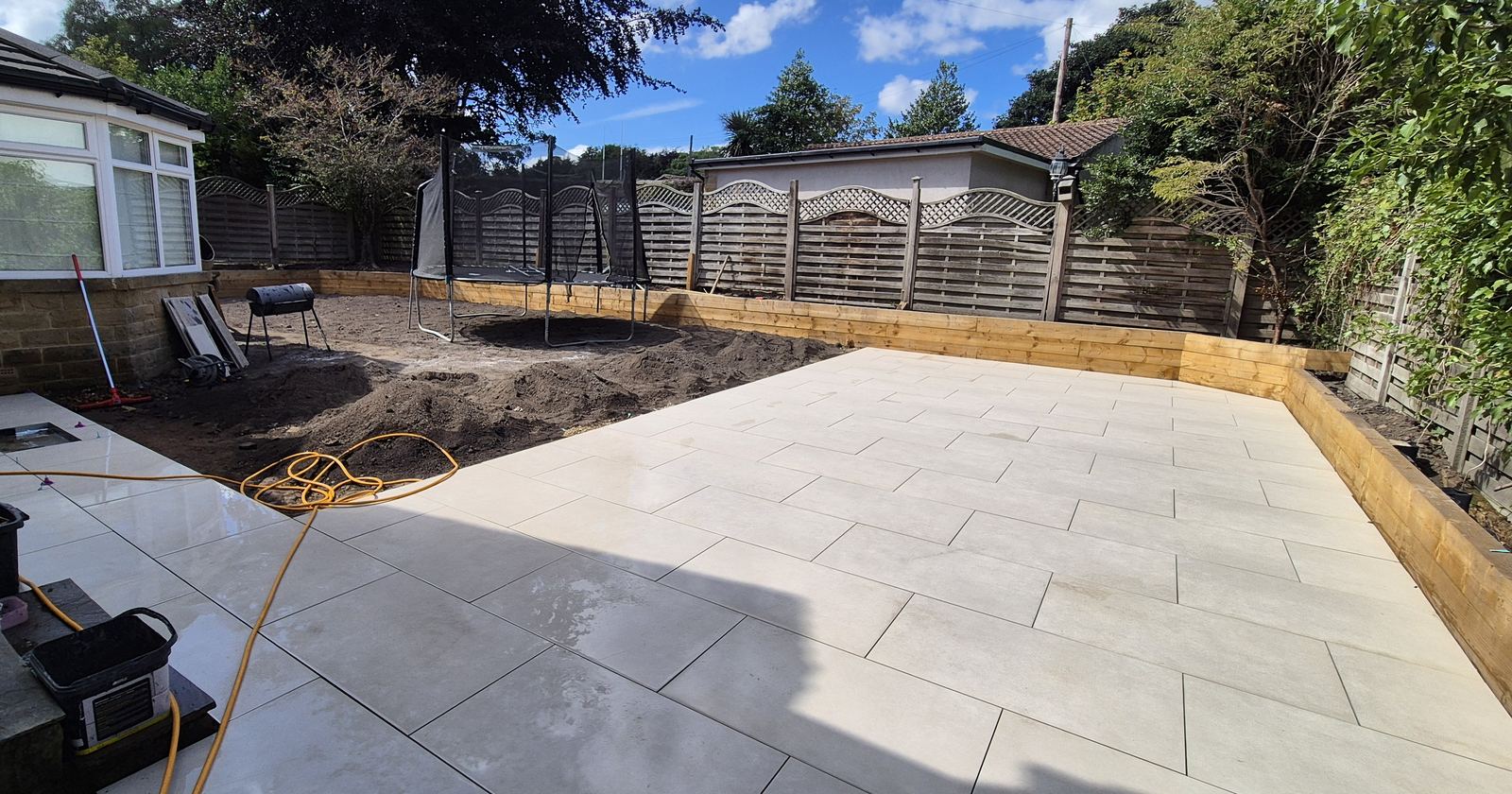
Laid wet to the sleeper-edged beds
Measured on site and itemised line by line.
Request a written quoteor view more paving in our projects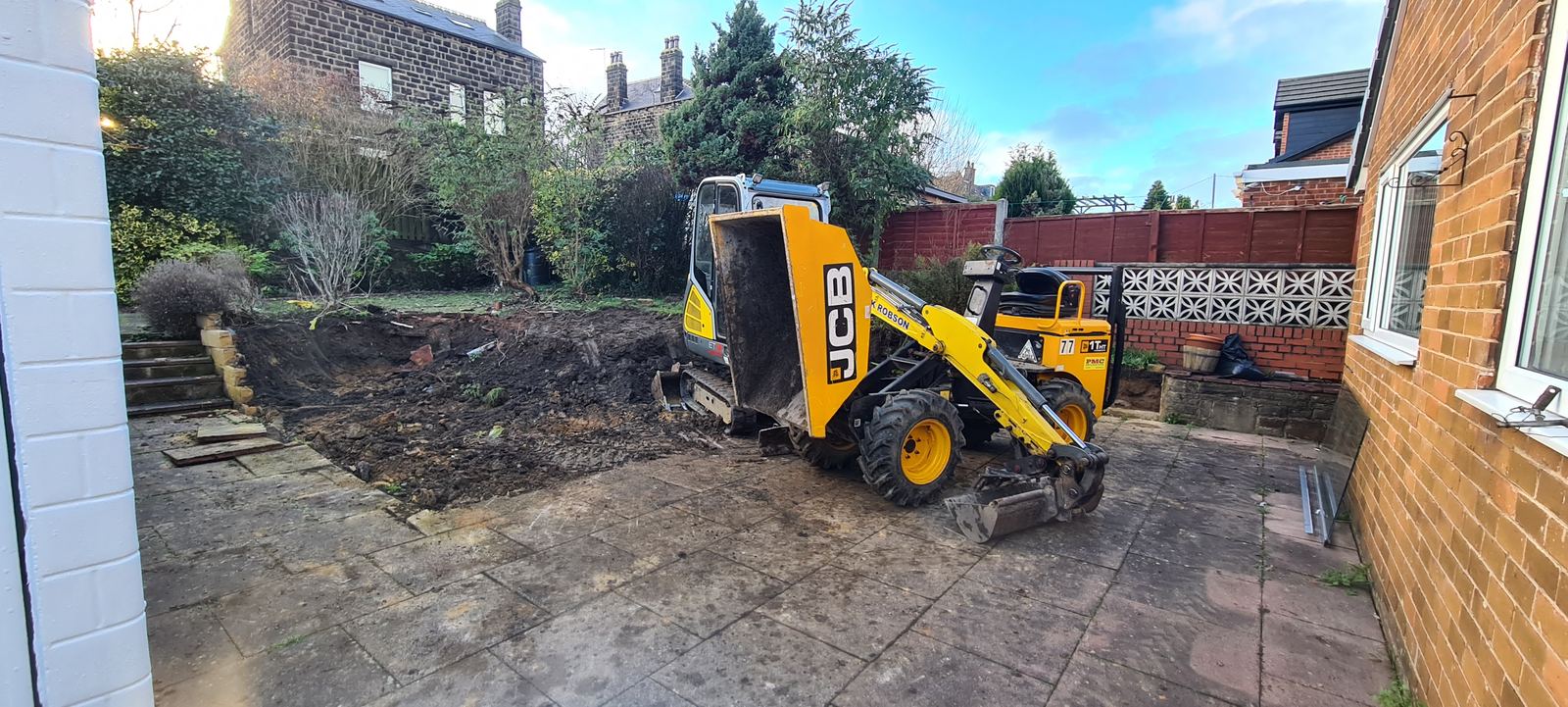
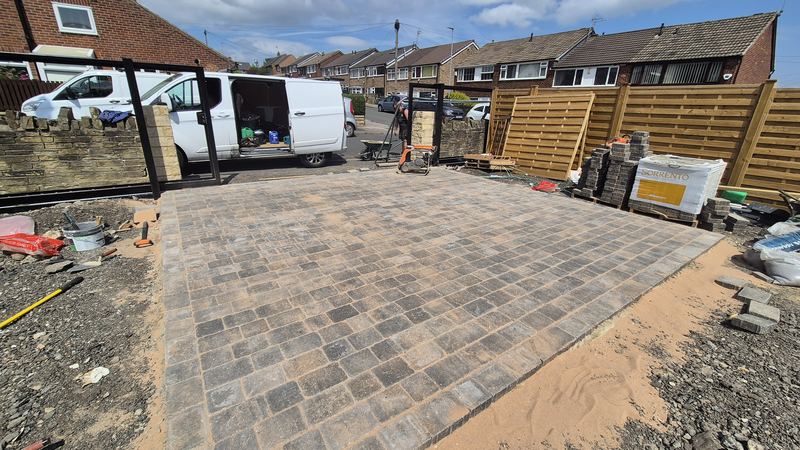
The old patio is lifted first
Porcelain is won or lost before the tile goes down. This is the order we work in, and what each stage is for.
We strip the existing surface, excavate to firm ground and compact a Type 1 sub-base to suit the ground.
The patio is set to a fall of roughly 1 in 80 away from the house, and kept low enough to sit below your damp-proof course and level under the door thresholds.
Every tile is primed with slurry on the back, then bedded on a full wet mortar bed, buttered and tapped down. We never spot-bed on five dabs.
Cuts are made wet on a diamond blade. External corners are mitred so a step reads as one solid piece rather than an applied trim, and thresholds are cut flush and level.
Joints are filled consistently to suit the range, and the whole patio is cleaned off before anything cures on the face. Porcelain records a careless clean-up permanently.
Guaranteed for 5 years
The 5-year workmanship guarantee covers the groundworks under the tile: the compacted sub-base, the full wet mortar bed, the slurry priming and laying of every tile, and the falls and drainage that take water away. Porcelain will not flex, so that build-up carries the whole surface. The tiles carry their manufacturer's warranty alongside ours.
Every stage of that happens before you ever see a tile. Tell us the size of the patio and we will price it for you.
Get a written quote →Common questions
Other services
One team, one standard of workmanship, across everything we build.
Still weighing up the options? Compare all three stones on the patios hub →
Send a photograph of the garden with rough measurements and we will visit to measure up. You will receive a written, itemised quote with the base, the priming and the cutting set out, so you can see what you are paying for.
Or call 07743 342155