Most people choose a driveway on looks, get three quotes, and pick the middle one. Then four winters later the surface has dipped where the wheels sit, the edges have crept, and water is standing at the front door.
The material matters. What sits underneath it matters more. This is how the common driveway surfaces actually compare on a Leeds house, what each one is genuinely good at, and the questions worth asking before you sign anything.
The short answer
If you want the honest summary before the detail:
- Block paving suits most houses. It is repairable, it grips, and it can be lifted and put back if anyone ever needs to dig.
- Tarmac is the cost-effective choice for a large or long drive. It goes down fast and it is plain, which is either the point or the problem.
- Indian sandstone is the best looking on the right house, and the most expensive of the common choices.
- Gravel is the cheapest and the fastest, and it is the wrong answer on a slope. It is not the core of what we do, but it belongs in an honest comparison.
- Porcelain belongs on a patio, not under a car.
- Resin is a legitimate surface. We do not install it, and we will tell you so rather than talk you out of it.
The surfaces at a glance
| Surface | Cost | Best for | Watch for |
|---|---|---|---|
| Gravel | Lowest | Flat sites on a tight budget | Slopes, pushchairs and wheelie bins |
| Tarmac | Low | Long drives and large areas | Plain looks, and patches that show |
| Block paving | Mid | Most houses. Lifts and relays for repairs | Re-sanding joints, and a base that must be right |
| Indian sandstone | High | Stone-fronted and period houses | Porous, so it stains. Full mortar bed only |
| Porcelain | Highest | Patios, not driveways | 20mm patio units under vehicle loads |
Swipe the table sideways to see every column.
Block paving
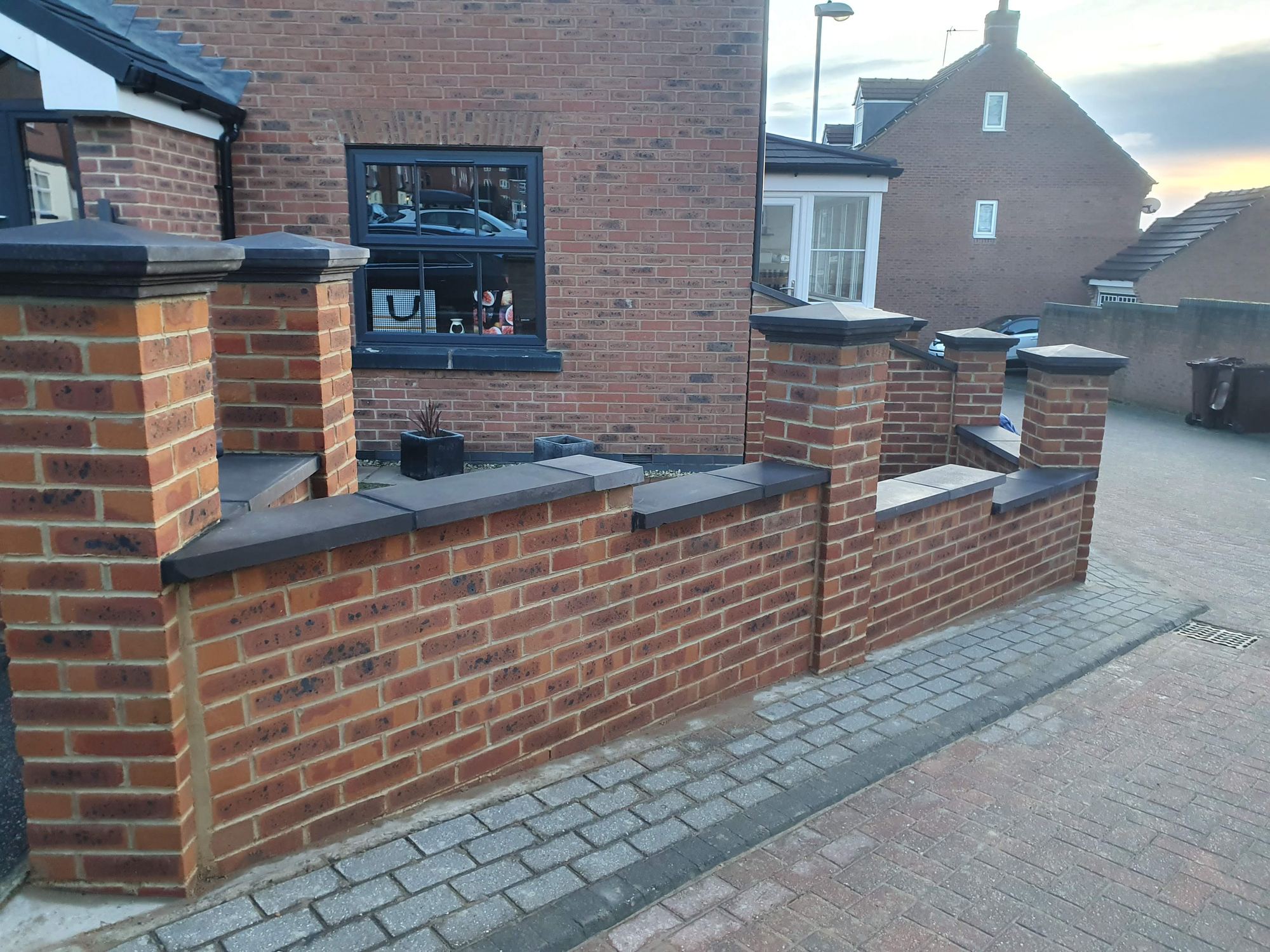
Block paving is the most popular driveway we lay, and for good reason. Concrete or clay blocks go down on a screeded sand bed with the edges haunched in, which means the surface flexes slightly with the ground instead of cracking across it.
The real advantage is repairability. If a water main, a drain or a cable ever needs reaching, the blocks over it come up and go back down. You would struggle to see where. No other driveway surface gives you that. It also means a single damaged area is a small job rather than a new driveway.
Grip is good, including on a wet slope, because the joints break up the surface. Colour choice is wide, and patterns such as herringbone lock together under vehicle loading in a way that stretcher bond does not.
The honest downsides: joints need kiln-dried sand, and sand washes out over time, so expect to re-sand occasionally and to deal with the odd weed. And blocks are completely unforgiving of a bad base. Almost every sunken block driveway in West Yorkshire is a thin sub-base or missing edge restraints, not a bad block. There is more detail on how we lay block paving if you want the full build.
Tarmac
Tarmac is the practical choice, and on a big area it is hard to argue with. It is laid hot in two layers, a coarser binder course and a fine surface course, rolled to a smooth, continuous finish with no joints for weeds to find. A drive that would take a week in blocks can be surfaced in a day once the base is in.
It earns its place on long drives, shared access and large frontages, where the square metre price of blocks or stone multiplies quickly. It also pairs well with other materials. A tarmac drive with a block paved border and apron gives you an edge that holds the surface in, and a frontage that looks considered rather than municipal.
The honest downsides. It is plain, and it fades from black to grey over the years. Oil, petrol and diesel soften it, and in a hot summer, turning the steering on the spot can scuff a newer surface. Repairs are possible, but a patch always shows, which is the opposite of block paving. And standard tarmac is impermeable, so the drainage has to be designed in, which the planning section below covers.
Like every surface here, it is only as good as what it sits on. Tarmac laid thin over a poor base cracks and ponds within a few winters. A written quote should state the sub-base depth and the thickness of both courses.
Indian sandstone and natural stone
Natural stone is the best looking surface on the right house, and on a period or stone-fronted Leeds property nothing else comes close. Riven Indian sandstone laid on a full mortar bed gives you colour variation and texture that no manufactured product reproduces.
Two things to understand before you commit.
First, sandstone is porous. It takes up water, and it will take up barbecue grease, red wine and leaf tannin too. Sealing is optional rather than essential, and plenty of people prefer to let stone weather naturally, but if you want it to stay close to the colour it arrived in, budget for it. Our Indian stone page puts sealing at around £5.50 to £7 per square metre, which is the going rate.
Second, a Yorkshire winter is a genuine test. Water gets into a porous stone, freezes, expands, and works at the material. Good quality stone laid on a full mortar bed with no voids underneath handles that fine for decades. Thin, cheap stone spot-bedded on five dabs of mortar does not, because the voids fill with water and the flag cracks over the hollow. If a quote for stone does not say “full mortar bed”, ask why.
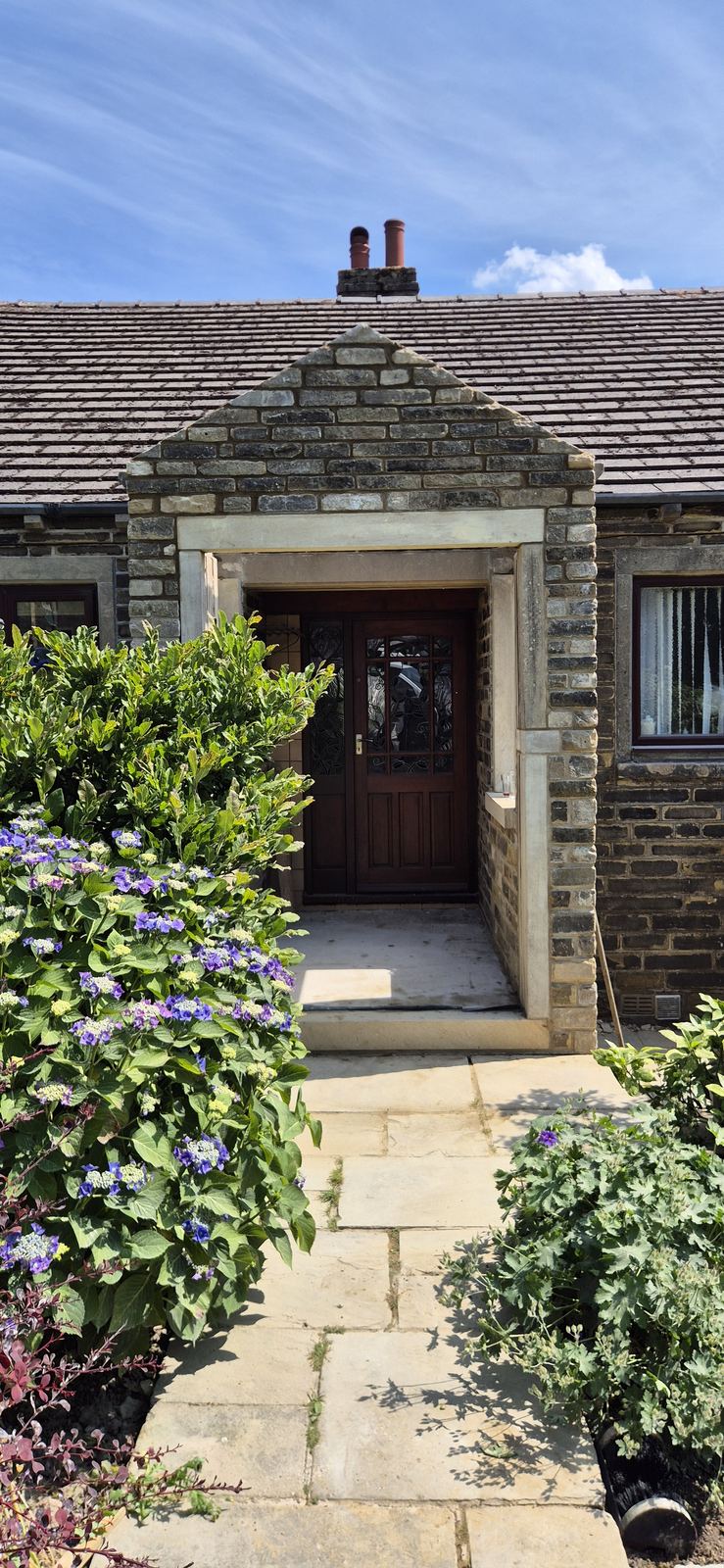
It is the most expensive of the common driveway surfaces both to buy and to lay.
Porcelain, and why we are cautious about it on a driveway
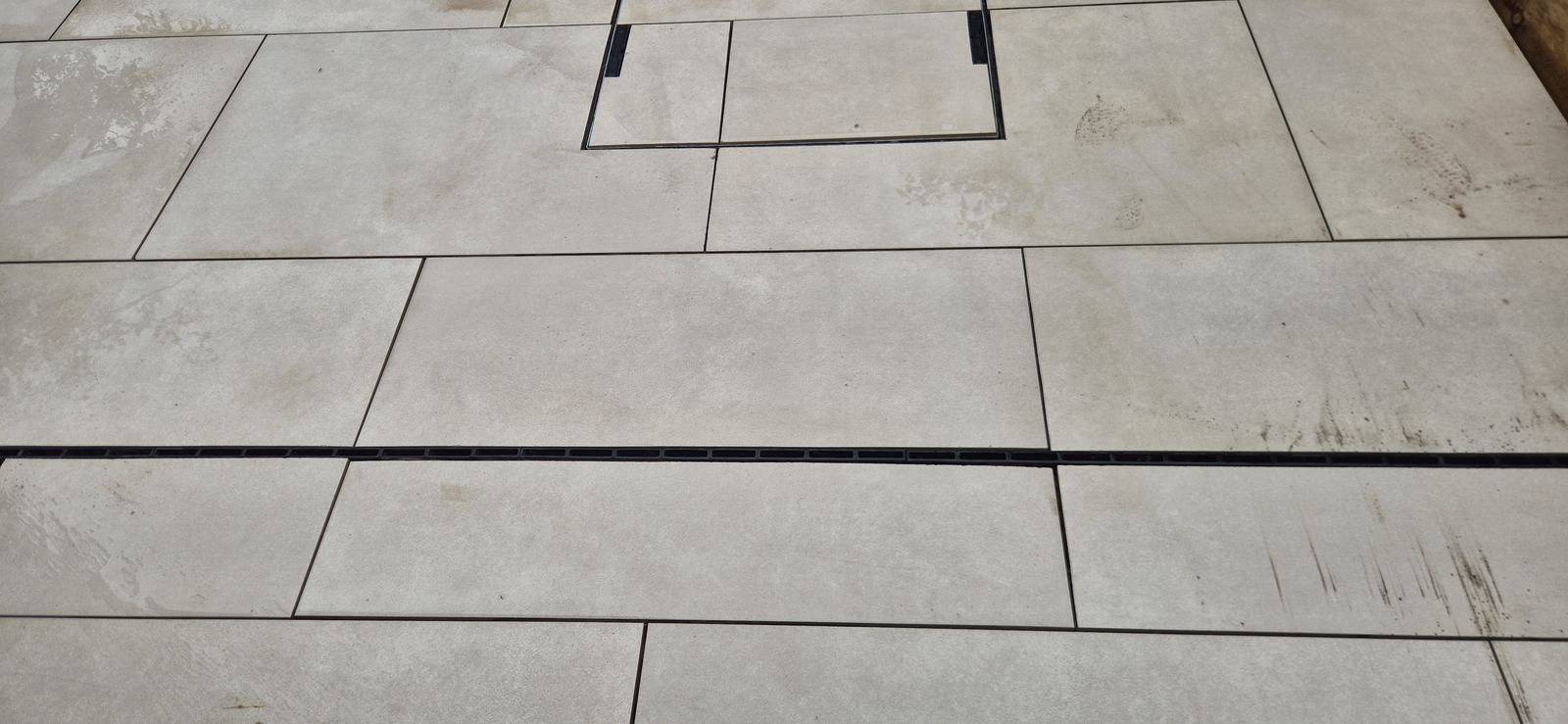
Porcelain is a superb material. Everything we lay outdoors is 20mm outdoor grade, rated R11 or better for grip, primed and bedded on a full wet mortar bed. It does not stain, it does not need sealing, it holds its colour, and it is very easy to keep clean.
The point most articles skip: 20mm porcelain is a patio product. It is engineered for foot traffic, frost and garden furniture, not for the point loading of a car turning its wheels on a driveway. There are thicker vehicle-rated porcelain systems, and they are a specialist job with a specialist price.
So our honest position is that porcelain earns its premium on a patio, where you will be looking at it and walking on it every day. On a driveway it is rarely the sensible use of the same money. If you do go that way with anyone, the base and the priming matter more than with any other surface, because a rigidly bedded tile has no ability to flex. A slurry primer on the back of every unit is not optional, and a tile laid without it will eventually let go of the bed.
Gravel
Gravel is not the core of what we do, but no honest driveway comparison leaves it out. It is the cheapest surface to lay and the quickest to install, and on the right property it looks completely at home. Laid over a gridded or bound base it stays where it should, and topping it up is a bag-and-a-rake job rather than a trade visit.
The practical downsides are real and worth being blunt about. On any meaningful slope, gravel migrates downhill, and it ends up on the pavement and in the road. It is hard work with a pushchair, a wheelie bin or a wheelchair, because small wheels sink and steer badly. It travels indoors on shoes. And it needs genuinely well-set edging to hold it, which is where cheap gravel drives usually fail.
If budget is the deciding factor, gravel is normally the right answer. If anyone in the house pushes a pram or a chair up the drive every day, it usually is not.
Resin: we do not install it
Resin bound gravel is a real surface with real advantages. It is smooth, it is seamless, it can be laid permeable, and it solves the pushchair problem that loose gravel creates.
We do not install it, and we are not going to pretend otherwise or talk you out of something that might suit you. If you want a seamless, permeable, wheel-friendly surface and you like the look, resin is worth getting quoted by a specialist who does it every week. What we would say is that resin is only as good as what it is bound to, and it is usually laid over tarmac or concrete, so the base questions on this page still apply. A resin surface over a failing base fails with it.
Cost, from cheapest to most expensive
We are not going to publish square metre rates in a guide, because a driveway is priced on the actual site rather than on an average. The order, though, is consistent:
- Gravel, cheapest to buy and quickest to lay.
- Tarmac, usually the least expensive hard surface, and the gap widens as the area grows.
- Block paving, mid range and the most common choice.
- Indian stone, the most expensive of the mainstream surfaces.
- Vehicle-rated porcelain, a specialist premium above all of them.
What actually moves the number on a quote is rarely the surface alone:
- Size in square metres. More area means more excavation, more sub-base and more material.
- Excavation depth and spoil removal. Clay or old made ground means more away by grab lorry, and tipping charges are real money.
- Drainage. A channel drain, a soakaway or a full permeable build-up costs more than a simple fall.
- Access. Barrowing to the back of a house is far slower than driving a machine onto the front.
- A dropped kerb, which is a separate council application and priced separately.
Two quotes are only comparable if they cover the same excavation depth, the same sub-base thickness and the same drainage solution. They very often do not.
Planning permission and drainage
This is the part most driveway pages leave out, and it is the part that can cost you.
Since 2008 a new front driveway in England cannot simply discharge its water onto the road. According to the Planning Portal, you do not need planning permission for a new or replacement driveway of any size if it uses permeable or porous surfacing that lets water drain through, such as gravel, permeable concrete block paving or porous asphalt, or if the rainwater is directed to a lawn or border where it can drain naturally.
Planning permission is needed if you cover more than five square metres with a traditional impermeable surface that makes no provision for water to run to a permeable area.
In plain terms: you can have the surface you want, but the water has to go somewhere on your own property. That is achieved with a permeable build-up, a soakaway, or a channel drain into existing drainage, and it should be designed at quotation stage rather than discovered on site. Mortar-bedded flags, standard tarmac and standard block paving are impermeable, so those are the ones that need the drainage designing in. Permeable block paving, laid with open-graded joints on a permeable build-up, is the way round it if you would rather not design a soakaway.
Two caveats worth knowing. These allowances apply to houses, not to flats or maisonettes. And some properties sit under an Article 4 Direction or a planning condition that removes permitted development rights, which is more common than people expect on conservation-area streets. If in doubt, that is a question for Leeds City Council before work starts, not after.
Dropped kerbs
If your driveway involves crossing the footpath, you need a dropped kerb, and that is a separate matter from the driveway itself. It is a highways crossing and a council application, assessed on visibility, on the position of the crossing relative to junctions, and on what is buried under the pavement.
It is applied for through the council, carried out by an approved contractor, and priced separately from the driveway work. It is also the item most likely to set your start date, so it is worth beginning that conversation early rather than once the drive is dug out.
What a proper build-up looks like
You are not going to be laying this yourself, and this is not a how-to. But knowing the sequence tells you what to look for in a written quote, and lets you spot the corner that a cheap price has cut.
A driveway built properly has these layers, and a quote should tell you the depth of each:
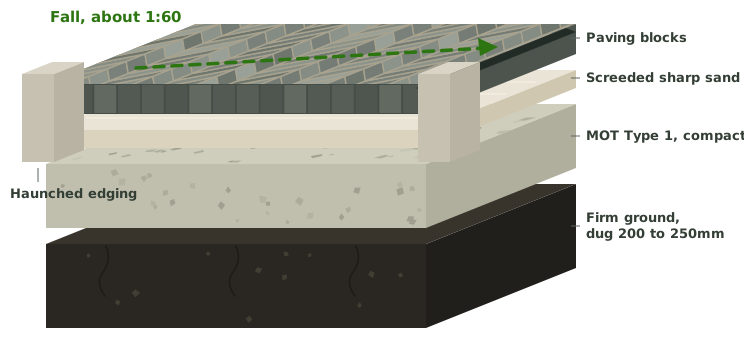
- Excavation to firm ground. Not a skim of the old surface. Depth depends on the ground and on whether vehicles will use it.
- A membrane, separating the sub-base from the subsoil so the stone does not migrate down into soft ground over time.
- A compacted MOT Type 1 sub-base, laid and compacted in layers with a plate compactor rather than in one deep dump. This is the layer that carries the weight of the car. Skimp it and the surface sinks within a winter or two, whatever sits on top.
- Edge restraints, set on concrete and haunched. Without them the surface spreads sideways and works apart at the edges. This is the first corner a cheap quotation tends to cut.
- The laying course, which changes with the surface: a screeded sharp sand bed for blocks, a full mortar bed for flags, a binder course and a surface course for tarmac, and a compacted bedding layer under gravel.
- Falls and drainage, roughly 1:60, taking water to a channel drain, a soakaway or a permeable build-up, and never onto the road.
Two related things worth refusing. The first is laying a new surface over existing concrete or tarmac. It traps water, hides whatever is already failing underneath, and raises your finished level towards the damp proof course and the door threshold. The second is any quote that will not state sub-base depth in writing. If it is not written down, it is not promised.
Which should you pick?
- On a budget, on the flat, no pushchair: gravel.
- A typical Leeds semi or terrace, wanting something that lasts and can be repaired: block paving. This is the right answer for most houses.
- A long drive, a shared access or a large area where the budget has to stretch: tarmac, ideally with a block paved border to hold the edge and lift the look.
- A stone-fronted or period property where the frontage is the whole point: Indian sandstone, laid on a full mortar bed.
- You want a smooth, seamless, permeable surface: resin, from a specialist. We will point you elsewhere rather than sell you something we do not lay.
- You are actually thinking about the patio, not the drive: porcelain, every time.
If you would rather see finished work than read about it, our projects show real jobs, and the driveways page sets out exactly what is and is not included in a quotation.
Common questions
Do I need planning permission for a new driveway? Usually not. A permeable surface of any size, or any surface that drains to a lawn or border rather than the road, does not need permission. You need it if you cover more than five square metres with an impermeable surface and make no provision for the water. Article 4 Directions and conservation areas are the exception worth checking.
Which driveway lasts the longest? All of them last, if the base is right. That is not a dodge, it is the actual answer. A block driveway on a full Type 1 sub-base with haunched edges will outlive a stone driveway spot-bedded on a thin base by decades. Choose the builder before you choose the material.
Can you lay a new driveway over the old concrete? As a rule, no. It traps water, conceals whatever is already failing beneath it, and raises the finished level above your damp proof course and thresholds. We excavate and build the base from scratch. It costs a little more at the outset and it is the difference between a driveway that lasts and one that fails within a few winters.
Why will you not quote for resin? Because we do not lay it, and we would rather tell you that than sell you a surface we do not install every week. Resin is a good product in the right hands. Those hands are not ours.
What happens if it sinks later? Contact Simon directly. If the fault is in our workmanship, meaning the excavation, the sub-base, the edge restraints or the drainage, we put it right under the 5-year workmanship guarantee at no cost to you.
Is tarmac or block paving better? Tarmac if the area is large and cost per square metre is what decides it. Block paving if you want pattern, colour and a surface that can be lifted and relaid without leaving a scar. On many houses the best answer is both: tarmac for the run, blocks for the border and the apron by the road.
Is block paving or Indian stone better? Block paving if you want repairability, grip and the wider choice of colour and pattern. Indian stone if the frontage is the whole point of the house and you want it to look like stone, not like blocks. Blocks can be lifted individually and put back, which stone laid on a full mortar bed cannot, so on a drive that may be dug up for a service run the blocks win on practicality alone.